Choose bread and order at a German bakery
Name the bread or rolls you want, give the quantity, and listen for questions about slicing or taking the order away. When you do not know a bread’s name, use the display to identify it and ask one specific question before choosing.

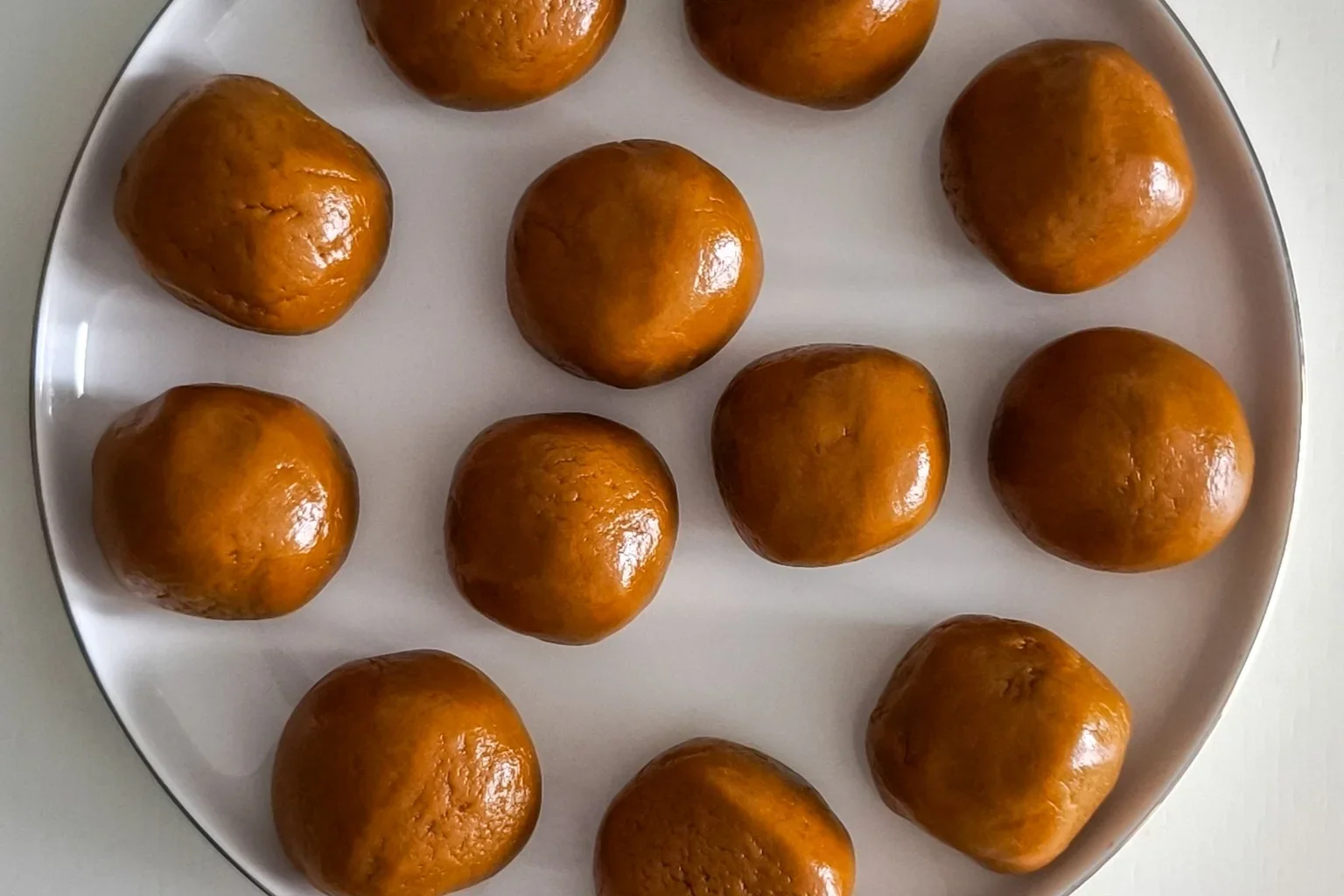
Quick answer
“Ich hätte gern drei Brötchen” means “I would like three bread rolls.” For a loaf, “Können Sie das Brot schneiden?” means “Can you slice the bread?” Practice the choice between a whole loaf and individual rolls, then handle the follow-up that belongs to your purchase.
In this guide
A loaf and a roll create different orders
“Brot” means bread or a loaf of bread, depending on the context. “Brötchen” means a bread roll. If you need breakfast for several people, saying a number of rolls is different from asking for several loaves. Look at the product as well as the label before turning an English shopping list into German.
“Ein Brot, bitte” means “One loaf, please” in a bakery purchase. “Vier Brötchen, bitte” means “Four rolls, please.” The visible product makes the first request more specific, but a shop with several loaves will still need to know which one you want. You can point, name the label, or ask about the type before confirming.
This guide uses broadly recognizable German terms while allowing for local names. You may see or hear other names for rolls in different regions. Rather than trying to memorize every regional term before entering a bakery, use the name on the display and confirm the product. The object in front of you is useful information, not a sign that you have failed to remember vocabulary.
Read the label as a clue, not a complete recipe
German bread names often contain recognizable parts. “Roggen” means rye and “Weizen” means wheat. Seeing either in a name can help you ask a more focused question, but a product name does not necessarily list all its ingredients. Treat the label as a starting point for choosing and clarifying, not a complete description of how the bread was made.
“Was ist das für ein Brot?” means “What kind of bread is that?” A shorter question such as “Ist das mit Roggen?” means “Is that made with rye?” The answer may introduce another unfamiliar word. Ask about the part that matters to your choice rather than pretending the whole explanation was clear.
If you have a dietary restriction that needs reliable ingredient information, state the actual ingredient or requirement and ask staff to check. Do not infer that a dark loaf has a particular flour or that visible seeds tell you everything inside. The language skill is making a clear request for information; visual appearance cannot answer that request on its own.
Build the order around the thing you can identify
“Guten Morgen, ich hätte gern drei Brötchen” means “Good morning, I would like three rolls.” You can add “bitte” (please), but you do not need to keep adding polite phrases after every noun. Give the person enough time to collect the requested items before starting a separate question about another shelf.
If you know the name from a label, put it after the quantity. If not, “Diese hier, bitte” means “These here, please” while indicating several items. A gesture should narrow the choice, not sweep across the whole display. Let the person confirm what they are reaching for before adding a number or a second product.
For a second item, “Und ein Stück Kuchen, bitte” means “And a piece of cake, please.” The unit “ein Stück” tells the person you mean a piece, not necessarily an entire cake. Think about the selling unit when you practice: one loaf, three rolls, one slice or piece. A clear unit prevents a misunderstanding that pronunciation alone cannot solve.
The slicing question belongs to the loaf
“Geschnitten oder am Stück?” means “Sliced or whole?” in this context. If you want a sliced loaf, answer “Geschnitten, bitte” (Sliced, please). If you prefer it whole, “Am Stück, bitte” (Whole, please) answers the other option. The question changes how the bread is prepared for you, not which loaf you have selected.
You can ask directly, “Können Sie das Brot schneiden?” (Can you slice the bread?). The person’s answer tells you what this bakery can do for that loaf. Do not assume that every product can be sliced or that every shop has the same equipment. If slicing is not available, you can still decide whether the loaf suits your needs.
Try the order in two stages: identify a loaf, then answer the slicing question. If you rehearse it as one long memorized request, you may keep speaking when the baker is already asking for a choice. The listening-for-meaning guide helps you identify what the question is about before selecting an answer.
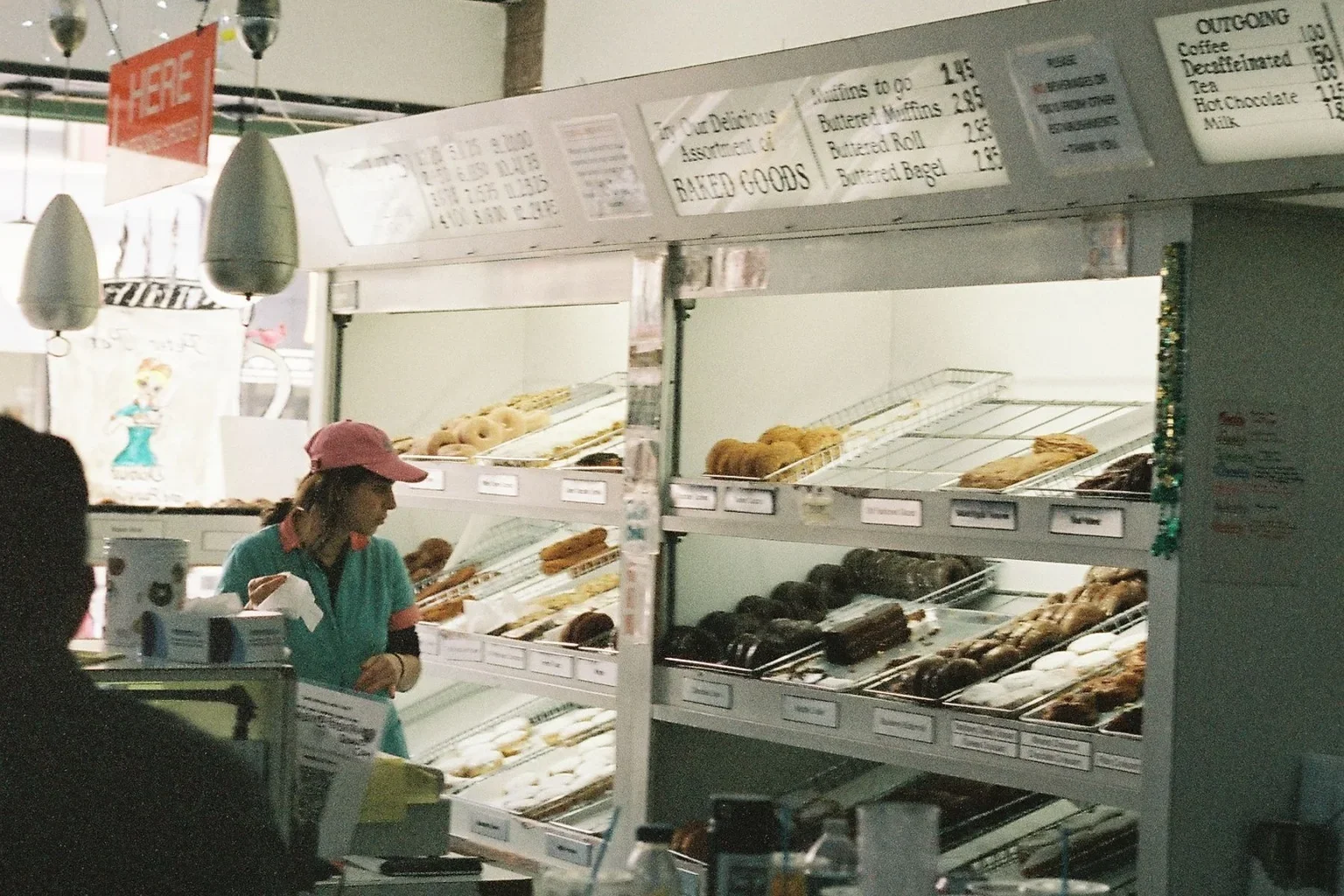
A counter exchange with two kinds of product
The following original conversation combines rolls and a loaf. It is intentionally not a list of everything you might buy. The point is to hear which follow-up applies to which item.
| Speaker | German | Meaning |
|---|---|---|
| Customer | Guten Morgen. Zwei Brötchen und dieses Brot, bitte. | Good morning. Two rolls and this loaf, please. |
| Baker | Das Brot geschnitten? | The loaf sliced? |
| Customer | Ja, bitte. | Yes, please. |
| Baker | Sonst noch etwas? | Anything else? |
| Customer | Nein, danke. Das ist alles. | No, thank you. That is everything. |
| Baker | Bitte schön. | Here you are. |
| Customer | Danke. Auf Wiedersehen. | Thank you. Goodbye. |
Change one choice
The customer does not repeat “two rolls” when asked about slicing. That answer would ignore the baker’s new question. On a second reading, change the loaf preference to “Nein, am Stück, bitte” (No, whole, please). Keep the quantity of rolls unchanged so you can focus on the one decision that moved.
For a third reading, add an item after “Sonst noch etwas?” You might say “Ja, noch ein Brötchen, bitte” (Yes, one more roll, please). Now the order grows rather than ending. Both versions are useful because they teach you to respond to the question instead of attaching the same final sentence to every transaction.
Here, takeaway, or a separate café order
“Zum Mitnehmen?” means “To take away?” A clear answer is “Ja, zum Mitnehmen” (Yes, to take away). Where seating is available, you may hear “Zum Hieressen oder zum Mitnehmen?” (To eat here or to take away?). “Zum Hieressen” means “To eat here.” Learn to recognize the contrast rather than trying to translate each grammatical piece during the purchase.
A shop that also serves drinks may handle the café order differently from a bread purchase. Watch the actual counter arrangement and ask if you are unsure. Do not assume that ordering a loaf commits you to a seated meal, or that a coffee will automatically arrive with the pastry you selected.
Keep the practice scenario explicit. In one round, you buy bread for home. In another, you buy a pastry to eat there. The packaging question belongs naturally to the second scenario, but may also arise in other ways. Giving each rehearsal a clear setting makes the language less arbitrary and helps you recognize when a question is relevant.
Correct a quantity without reconstructing the whole order
If you asked for three rolls but the person collected two, say “Drei, bitte” (Three, please). To make the correction explicit, “Drei, nicht zwei” means “Three, not two.” A polite tone and a small correction are usually more useful than starting again with a greeting and repeating every item.
If you change your own mind, “Entschuldigung, doch nur zwei” means “Sorry, only two after all.” The wording marks a revision rather than accusing the baker of hearing incorrectly. Practice that distinction with an invented order: first the other person mishears you; next you decide to buy fewer. The outcome may be the same, but your conversational job differs.
When a product is unavailable, ask “Was haben Sie stattdessen?” (What do you have instead?). That may produce a broad answer, so pointing to a visible alternative can be easier. You can then say “Dann nehme ich das” (Then I’ll take that). Our short-reply guide offers ways to keep a turn manageable when a prepared order no longer fits.
Check the total and the practical details
“Wie viel macht das?” means “How much is that altogether?” If you miss the number, ask “Können Sie den Preis bitte wiederholen?” (Can you repeat the price, please?). You are asking for one missing detail, not another complete explanation of the order. Look at the displayed total when one is available.
“Kann ich mit Karte bezahlen?” means “Can I pay by card?” Use the answer for this transaction rather than treating a phrasebook as evidence of a shop’s payment policy. For practice, make up clearly labeled example totals. An old photograph of a menu or another shop’s price does not establish the amount you should expect to pay here.
If you need an additional practical detail, ask before leaving the counter. “Haben Sie eine Tüte?” means “Do you have a bag?” The reply will tell you what is available and whether there is anything else to arrange. Finish with a simple “Danke, auf Wiedersehen” (Thank you, goodbye) once the exchange is complete.
Make a shopping list that teaches a decision
Write a three-line list containing a loaf, several rolls, and an optional extra. Add one choice beside the loaf: sliced or whole. Then rehearse without looking at a model sentence. The list gives you the information to communicate, while leaving you to choose how to say it.
On the next round, cross out one product as unavailable. On another, change a quantity after ordering. Use the mistake-review routine to save the one repair phrase you needed most. A useful result is knowing what to say when the plan changes, not being able to perform the same ideal purchase faster.
The German forms-of-address guide explains the respectful questions used here. When you are ready for a service exchange involving more numbers and confirmation, try making an appointment in German. Keep the bakery task small enough to finish before adding a different kind of conversation to your practice.
Common questions
Is Brot the same as Brötchen?
No. “Brot” means bread or a loaf in this shopping context, while “Brötchen” means a bread roll. Learn the item with its selling unit so you do not request several loaves when you intended several individual rolls.
How do I ask for sliced bread?
“Können Sie das Brot schneiden?” means “Can you slice the bread?” If the baker asks whether you want it sliced, “Geschnitten, bitte” means “Sliced, please.” Confirm what the shop offers rather than assuming every loaf can be prepared the same way.
What does sonst noch etwas mean?
It means “Anything else?” Add another item if you want one, or say “Nein, danke. Das ist alles” (No, thank you. That is everything). It is not normally a request to repeat the order you have already given.
Do I need to know every regional name for a roll?
No. Begin with the label and the product in front of you. Regional names are useful to learn as you encounter them, but pointing clearly and confirming a quantity can complete a purchase while your vocabulary is still growing.
Sources and further reading
More practice guides
 German · Grammar in conversation 9 min read
Du, ihr, or Sie? German address in real situations
Choose du, ihr, or Sie in German, recognize formal address in speech and writing, and practice changing verbs and questions through translated situations.
Read the guide German · Everyday arrangements 9 min read
Make, confirm, and move an appointment in German
Arrange an appointment in German, compare available times, spell your name, and reschedule clearly with translated calls, message examples, and practice.
Read the guide AI conversations 10 min read
How to practice a language with AI roleplay
Set up an AI language roleplay you can finish. Choose a situation, define your goal, and leave room for a follow-up question with this practical exercise.
Read the guide