Italian train phrases for the right journey
A train heading toward the right city is not automatically the right train for your ticket. At the station, separate four questions: which service you are taking, whether your ticket covers it, where it leaves from, and where you belong on board. The Italian becomes easier when each question has one job.

Quick answer
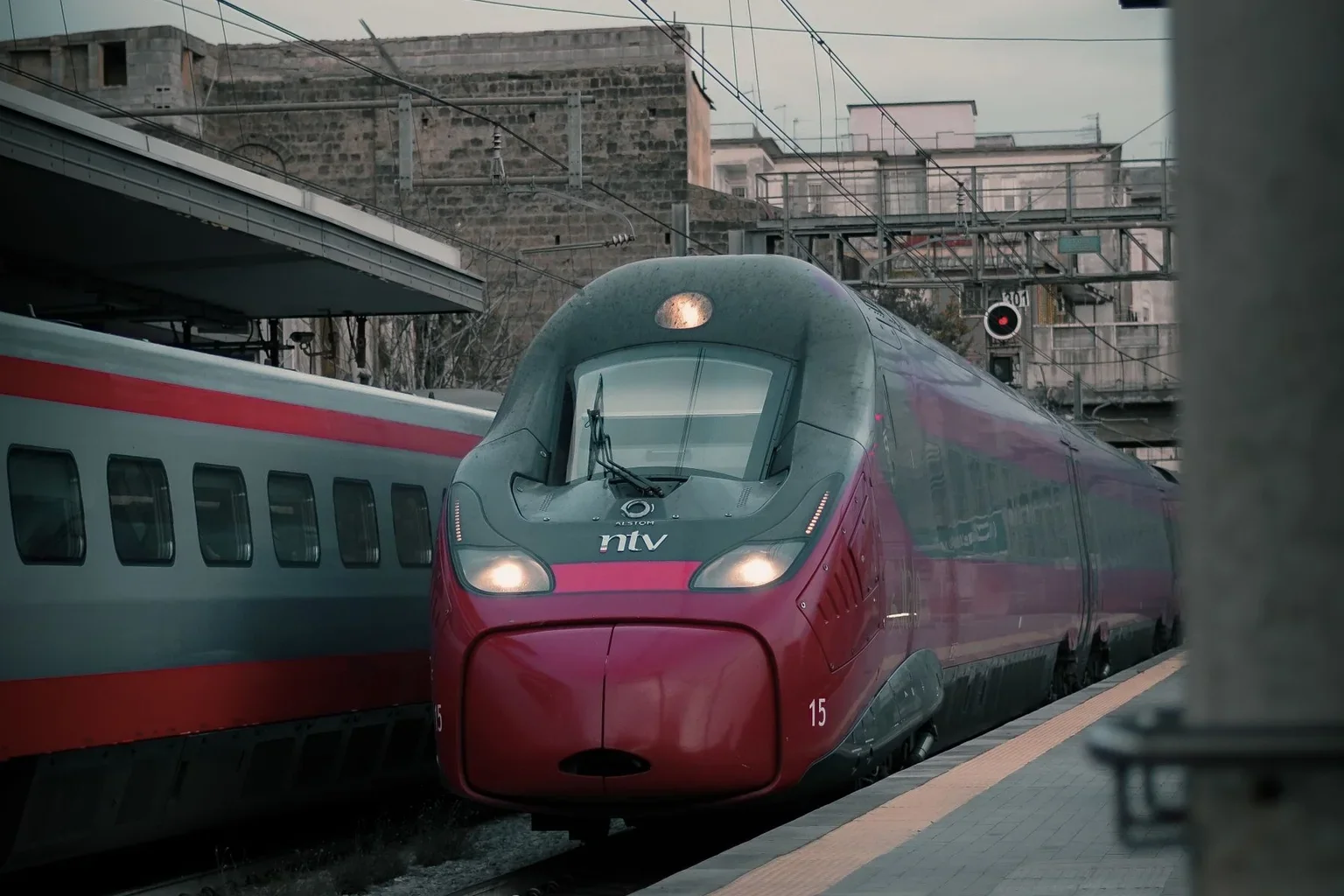
“È questo il treno per Bologna?” means “Is this the train for Bologna?” For ticket validity, ask “Questo biglietto va bene per questo treno?” (Is this ticket valid for this train?). Confirm the service and departure time as well as the destination.
In this guide
Start with what you already have
If you have a ticket, begin by finding the information on it rather than buying another one because the station feels confusing. Look for the departure station, arrival station, date, and service details. Some tickets also include a carriage and seat. The language task is matching those details to the service you intend to take.
“Ho già il biglietto” means “I already have a ticket.” It tells the person helping you that you need information about an existing journey. “Devo comprare un biglietto” means “I need to buy a ticket.” These openings lead to different conversations. Choosing the right one can prevent a long explanation of purchasing options when you only need to locate your train.
Keep the ticket or booking visible when asking staff about it. “Può controllare questo biglietto?” means “Could you check this ticket?” Showing the actual details lets the person answer a specific question. You do not need to pronounce a booking code from memory or describe a ticket type you have not yet learned to identify.
Buying a ticket begins with a route and a day
“Un biglietto per Bologna, per favore” means “A ticket to Bologna, please.” The request names a destination, but the seller may still need a departure time, date, and type of journey. “Per oggi” means “for today.” “Solo andata” means “one way,” while “andata e ritorno” means “return/round trip.”
If you want a particular service, state its time or show it. “Vorrei prendere il treno delle dieci e venti” means “I would like to take the ten-twenty train.” The time is an invented practice example, not a current timetable. Check the actual departure station too: a city may have more than one station, and a familiar city name alone may not identify the place where you need to board.
“Devo cambiare treno?” means “Do I need to change trains?” Ask this before assuming the journey is direct. If a change is required, “Dove devo cambiare?” means “Where do I need to change?” Those two questions establish the shape of the trip. You can then ask about the connection time or platform instead of mixing every possible travel detail into the opening request.
Keep platform, carriage, and seat separate
“Binario” refers to a track and appears in station information for the platform track. “Carrozza” means “carriage/coach,” and “posto” means “seat/place.” Three numbers next to those labels are not interchangeable. Knowing the labels lets you understand why moving to platform four does not put you in carriage four or seat four.
| Label or question | Meaning | Information you need |
|---|---|---|
| Da quale binario parte? | Which platform track does it leave from? | Where to board |
| Qual è la carrozza? | Which carriage is it? | The coach to find |
| Qual è il mio posto? | Which is my seat? | The assigned seat, if applicable |
| A che ora parte? | What time does it leave? | The departure time |
| Ferma a Firenze? | Does it stop in Florence? | Whether it serves that stop |
Find the label before the number
Do not assume every ticket has an assigned seat. If your ticket does show one, use the carriage and seat together. If it does not, ask about the service’s seating arrangement. The table teaches the questions; the answer depends on the actual train and fare. Keep those two layers separate so that a language example does not become a mistaken travel rule.
What does carrozza 1 in coda al treno mean?
"Carrozza 1 in coda al treno" means "Carriage 1 at the rear of the train." Carrozza 1 identifies the coach; in coda tells you its position. Treccani uses coda for the rear of a train. The number 1 does not mean you should look at the front when the announcement places that carriage at the rear.
Ask "La carrozza uno è in coda?" to check, meaning "Is carriage one at the rear?" Keep your platform and seat numbers separate. If you cannot tell which end of the platform to use, show staff your booking and ask where to find that carriage. Confirm the information for your own service rather than following another train's announcement.
Match the service before following its destination
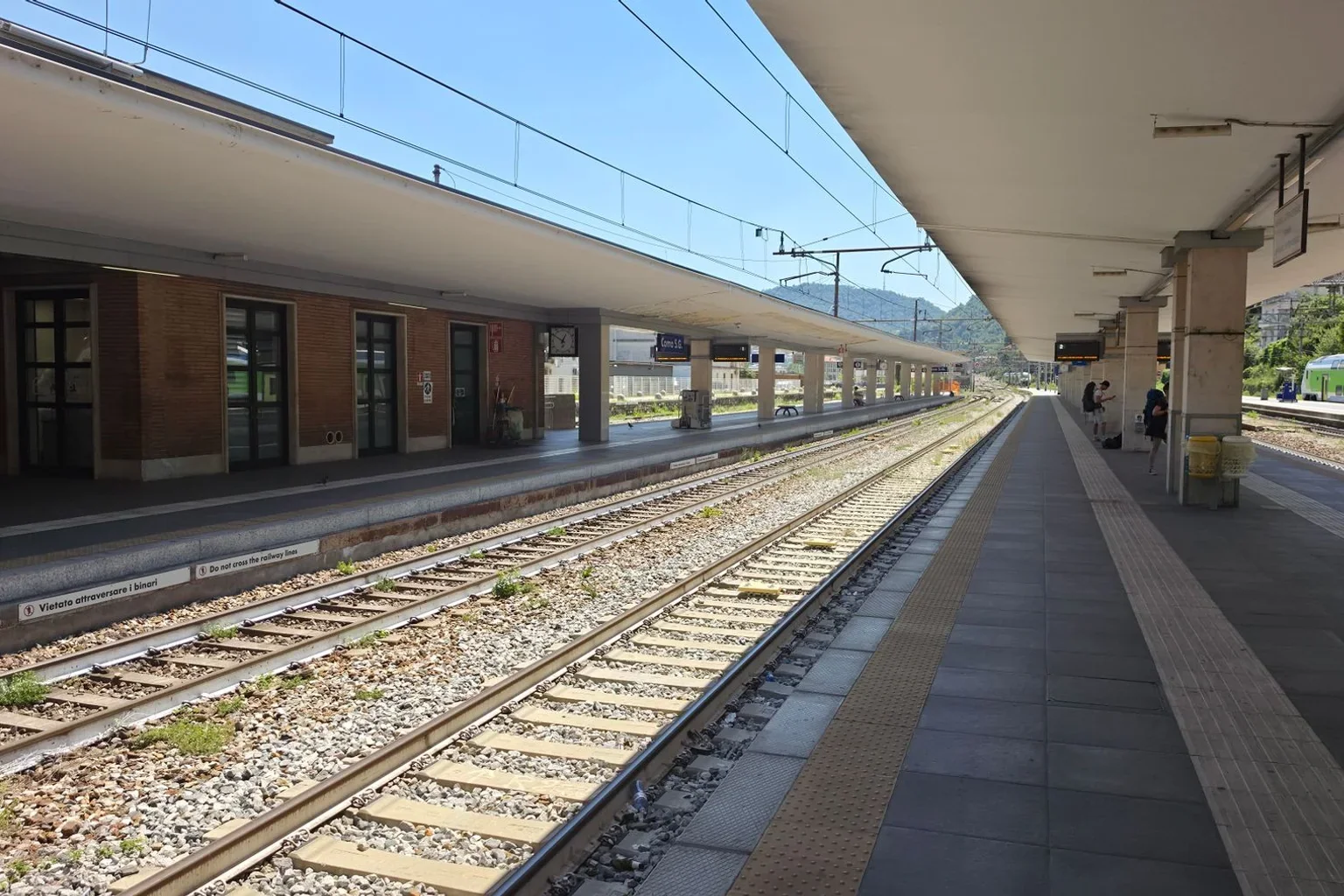
A departure board may show a train’s final destination rather than the stop where you intend to leave. Conversely, two services can head toward the same city but have different stops or ticket conditions. Compare the service identifier and scheduled time with your booking, then check the stop you need if it is not clear.
“Questo treno ferma a Parma?” means “Does this train stop in Parma?” It is more precise than asking whether the train goes in the general direction of Parma. “È il treno delle quattordici e dieci?” means “Is it the fourteen-ten train?” This gives another identifying detail. The times and cities here are language examples, not a suggested connection or live itinerary.
Before boarding, use the current board and official information rather than relying only on what you wrote down earlier. Platforms and service information can change. If two pieces of information conflict, ask staff about the specific train. Recognizing a city name is a useful start, but it should not replace checking the service that your ticket actually covers.
Ask about validation for this ticket
“Devo convalidare questo biglietto?” means “Do I need to validate this ticket?” This is a useful question precisely because ticket formats and conditions differ. It is safer to ask about the ticket you hold than to memorize a blanket statement that every Italian train ticket needs the same action before departure.
Trenitalia’s Digital Regional Ticket page describes automatic validation at the scheduled departure time for that product. That information should not be generalized to every paper ticket, other operator, or fare. Open the instructions associated with your actual purchase and ask staff if you are unsure. The source link below lets you check that specific product’s current instructions directly.
For a practical rehearsal, show a pretend ticket and ask the validation question. The helper must answer for the scenario you have chosen, rather than reciting a national rule. If you do not understand the answer, “Cosa devo fare prima di salire?” means “What do I need to do before boarding?” It turns unfamiliar terminology into a question about the action required.
A help-desk exchange with an existing ticket
This original conversation starts with the ticket already purchased. The traveller first checks validity, then asks where to board. The exact platform is fictional. Read it as a model for keeping two uncertainties separate, rather than as information about any real service.
The traveller says “Buongiorno, ho già il biglietto. Va bene per questo treno?” (Good morning, I already have a ticket. Is it valid for this train?). After checking, the member of staff answers “Sì, è il treno giusto” (Yes, it’s the right train). The traveller then asks “Da quale binario parte?” (Which platform track does it leave from?).
“Dal binario sei” means “From platform track six.” The traveller confirms “Sei, grazie” (Six, thank you). This last turn is short because the service question is already settled. If you tend to restart a whole explanation whenever one word disappears, practice this compact confirmation with our guide to speaking through a freeze.
Recognize a change without translating the whole announcement
“Ritardo” means “delay.” “Cancellato” means “cancelled,” and “soppresso” is another word used for a cancelled service. “Cambio di binario” means “platform-track change.” These labels indicate different problems. A delayed train still needs to be monitored; a cancellation may require a different travel arrangement; a track change may require you to move.
“Il treno parte dal binario otto” means “The train leaves from platform track eight.” If this is a change from the earlier information, verify that the announcement concerns your service before moving. Announcements may mention several cities or train numbers. Listen for the identifying details as well as the new platform so that you do not follow another train’s update.
When you miss the number, ask “Qual è il nuovo binario?” (What is the new platform track?). That question tells the helper exactly what you need. Our focused listening guide explains how to practice extracting one detail from a longer message. At a station, the useful result is the next correct action, not a perfect transcript of every announcement.
A missed connection needs a new question
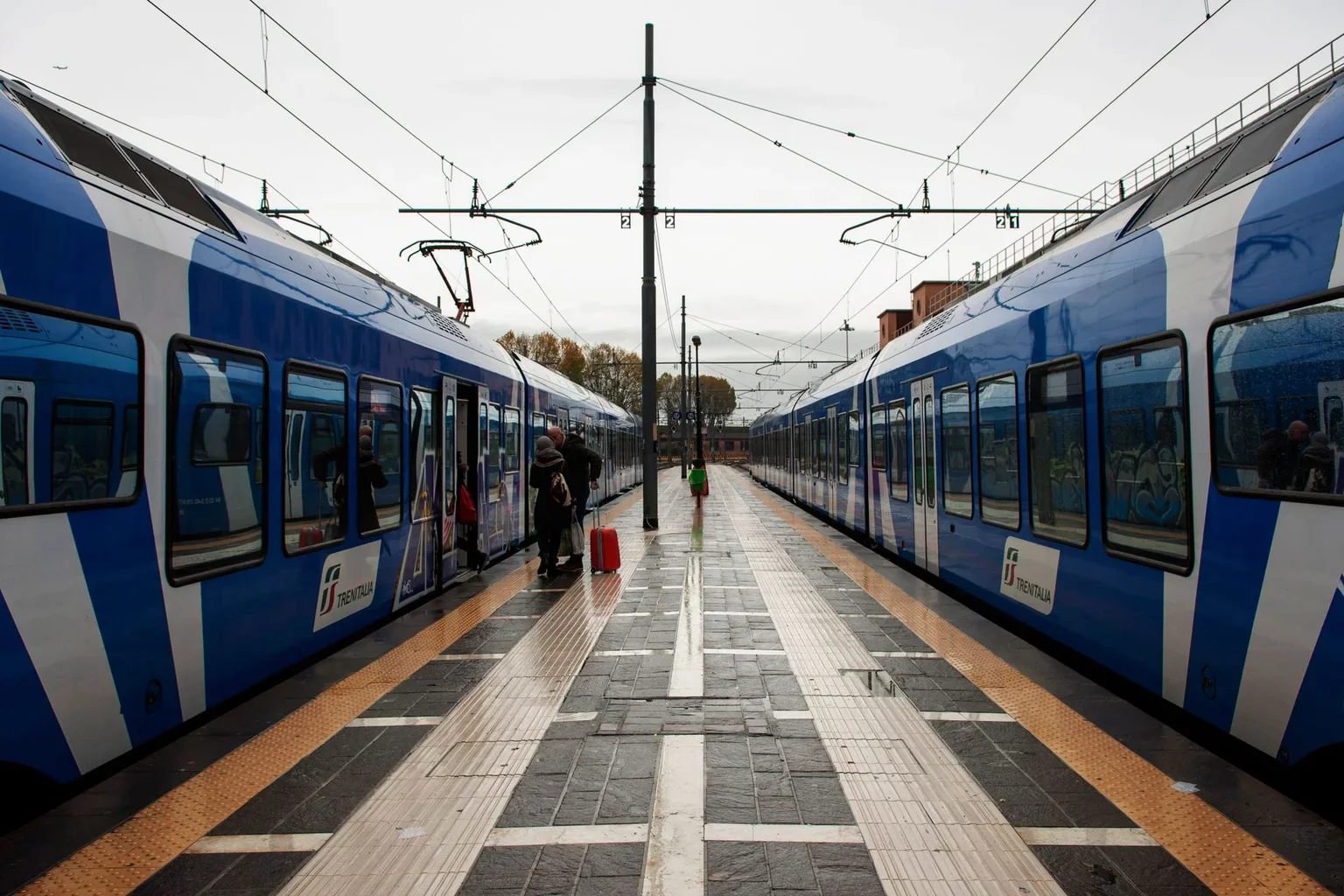
“Ho perso la coincidenza” means “I missed the connection.” It tells staff what happened, but it does not itself establish which later service you may take. Follow it with “Quale treno posso prendere con questo biglietto?” (Which train can I take with this ticket?). The ticket conditions and circumstances determine the answer.
“Devo cambiare il biglietto?” means “Do I need to change the ticket?” Use it if the next step is unclear. Do not assume that a train to the same destination automatically accepts the original booking. This guide supplies language for obtaining that information, while the operator’s current rules and staff instructions govern the actual journey.
If you are simply looking for the next departure, “Quando parte il prossimo treno?” means “When does the next train leave?” Keep the destination or route clear from context, or name it. Then separately check whether that train is an option for your ticket. Combining schedule information with ticket confirmation prevents a plausible timetable answer from being mistaken for permission to board.
Build a departure-board exercise at home
Draw three fictional departures with different times, final destinations, and platform tracks. Give yourself a ticket matching one service. Your first task is to identify that service using more than the city name. Then ask for its platform and write the answer. Change one platform number and repeat the check as if a new announcement had appeared.
In a second round, add a carriage and seat to the ticket. Say which information belongs on the station board and which helps after you reach the train. In a third, remove the assigned seat and practice asking about seating. Each round changes the information you have to use, rather than simply making the same sentence longer.
Keep a difficult number or question in your mistake-review routine. For the rest of a travel day, practice ordering coffee in Italian or asking for a meal at a restaurant. Those tasks reuse polite requests while giving you a different kind of follow-up to understand.
Common questions
What does carrozza 1 in coda al treno mean?
It means "Carriage 1 at the rear of the train." Carrozza 1 is the coach number, while in coda describes its position. It does not change your platform or seat number. Ask "La carrozza uno è in coda?", meaning "Is carriage one at the rear?", if you need confirmation.
What is the difference between binario, carrozza, and posto?
“Binario” identifies the platform track, “carrozza” the carriage, and “posto” the seat or place. Match each number to its label. A ticket may include a carriage and assigned seat, but you should not assume every service has the same seating arrangement.
Do all Italian train tickets need manual validation?
No single instruction applies to every ticket. Ask “Devo convalidare questo biglietto?” (Do I need to validate this ticket?) and check the instructions for your purchase. Trenitalia’s Digital Regional Ticket has its own automatic-validation arrangement, distinct from other formats and products.
How do I check whether my train stops at my destination?
Ask “Questo treno ferma a…?” (Does this train stop in…?) and add the station or city. Also match the service and departure time to your booking. A final destination on the board may be beyond the stop you need.
What should I say after missing a connection?
“Ho perso la coincidenza” means “I missed the connection.” Then ask “Quale treno posso prendere con questo biglietto?” (Which train can I take with this ticket?). Confirm the available option before assuming any later train will accept the booking.
Sources and further reading
More practice guides
 Italian · Grammar in conversation 11 min read
Italian tu vs Lei: which should you use?
Choose tu or Lei in Italian with clear examples, polite requests, and a conversation that switches between them. Practice verb forms and avoid common mistakes.
Read the guide Italian · Restaurant conversations 10 min read
Order an Italian meal one decision at a time
Read an Italian menu, order the meal you want, ask about ingredients, and handle the bill with translated conversations and practical restaurant exercises.
Read the guide Italian · Café conversations 9 min read
Order coffee in Italian, from cup to counter
Order coffee in Italian with clear examples for espresso, milk, decaf, counter service, and paying, then rehearse the follow-up questions you may hear.
Read the guide