How to ask for help in Spanish
To ask for help in an everyday Spanish conversation, use “¿Puede ayudarme, por favor?” and explain what you need. If the problem is understanding speech, choose a specific request: repetition, slower speech, an explanation, or a written detail.


Quick answer
“¿Puede ayudarme, por favor?” means “Could you help me, please?” Use “¿Puede repetir?” for repetition, “Más despacio, por favor” for slower speech, and “¿Puede escribirlo?” for writing. Name the unclear part when you can, then confirm the information before continuing.
In this guide
Five phrases to have ready
¿Me puede ayudar, por favor?
Could you help me, please?
A polite request to someone you do not know.
No entiendo.
I do not understand.
Use this to make a misunderstanding clear.
¿Puede repetir, por favor?
Could you repeat that, please?
Ask to hear the same information again.
Más despacio, por favor.
More slowly, please.
A short request when the pace is the problem.
¿Puede escribirlo?
Could you write it down?
Helpful for an address, a name, or a time.
A short conversation
La tienda cierra a las seis.
The shop closes at six.¿Puede repetir, por favor?
Could you repeat that, please?A las seis.
At six.Ah, gracias.
Oh, thank you.Match the request to the difficulty
“No entiendo” means “I don't understand.” It honestly identifies a problem, but it does not tell the other person what change would help. Add a specific request when you can. If you missed the sound, ask for repetition. If a word is unfamiliar, ask about its meaning. If the detail is a code or address, writing may help more than another spoken version.
Begin with “Perdón” or another polite attention-getter when you need to interrupt. Then make the request calmly. You do not need a long apology for asking someone to clarify a practical detail. A short, clear request gives them a way to respond.
This guide focuses on everyday conversation support, such as understanding a question at reception or clarifying a café order. The phrases are useful because they repair a particular gap. Practice them in those situations rather than repeating all of them as an unrelated list.
As you read the examples, decide what each one asks the listener to do differently. That distinction will help you choose a phrase in the moment. If every unclear reply leads to the same request, you may hear the same unhelpful explanation several times.
| Difficulty | Spanish request | Meaning |
|---|---|---|
| You missed what was said | ¿Puede repetir, por favor? | Could you repeat, please? |
| The speech is too fast | Más despacio, por favor. | More slowly, please. |
| One word is unfamiliar | ¿Qué significa esta palabra? | What does this word mean? |
| You need an exact written detail | ¿Puede escribirlo, por favor? | Could you write it down, please? |
| You need general assistance | ¿Puede ayudarme, por favor? | Could you help me, please? |
Ask for repetition when another listen will help
“¿Puede repetir, por favor?” is useful when you were distracted, there was background noise, or you only missed the end of a question. Listen to the repeated version with a clear target. You might be trying to hear a time, a drink choice, or the place the person mentioned.
If you understood most of the sentence, ask about the missing part. “¿A qué hora?” means “At what time?” and fits when the time was unclear. Repeating the whole conversation may create more information to hold than you need. A focused question lets the other person repair the specific gap.
Do not assume repetition will solve an unfamiliar word. If the second version is equally unclear because you do not know its meaning, change the request. Ask for an explanation, a gesture, or a written version depending on the situation. The useful question is what new information you need.
In practice, play a short recording once and identify the part you missed before replaying it. The listening guide explains how to distinguish a sound problem from a meaning problem and make the next listen more purposeful.
Ask for slower speech without losing the message
“Más despacio, por favor” means “More slowly, please.” You can use it after indicating that you did not understand. The request concerns pace, so it is a good choice when familiar language arrives too quickly to follow.
A longer option is “¿Puede hablar más despacio, por favor?” meaning “Could you speak more slowly, please?” Learn whichever version you can retrieve comfortably. You do not need the longer sentence for the request to be clear in a conversation where someone is already speaking to you.
Listen for groups of meaning in the slower version. Slowing down is helpful when it gives you enough time to connect an action to a place or a question to a choice. It does not mean every word must be separated into an artificial pronunciation exercise.
When a partner helps you practice, ask them to keep a natural short phrase together while reducing the pace. After understanding it, hear the same message at a more ordinary speed. That connects the supported version to the kind of speech you hope to understand later, instead of leaving the practice permanently at one slow pace.
Ask what a word means
“¿Qué significa esta palabra?” means “What does this word mean?” Use it while pointing to a word in a menu, message, or form. If you heard the word clearly, you can ask “¿Qué significa…?” and repeat it. A concrete referent helps the person know which part to explain.
You can also say “No entiendo esta palabra,” meaning “I don't understand this word.” That narrows the difficulty even before you ask for help. The person might give an example, a synonym, or a gesture. Listen for whether the explanation resolves the meaning in this situation, not just whether it contains a familiar English translation.
Some words have several meanings. If an explanation seems unrelated to the conversation, show the original sentence or say where you encountered the word. A menu word, a bank term, and an everyday expression may require different senses of the same dictionary entry.
Afterward, save the useful word inside the phrase where you needed it. Our Spanish vocabulary guide explains how to create a situation prompt that asks you to retrieve the meaning and use, rather than simply reread a translation.
Request writing for names, times, and codes
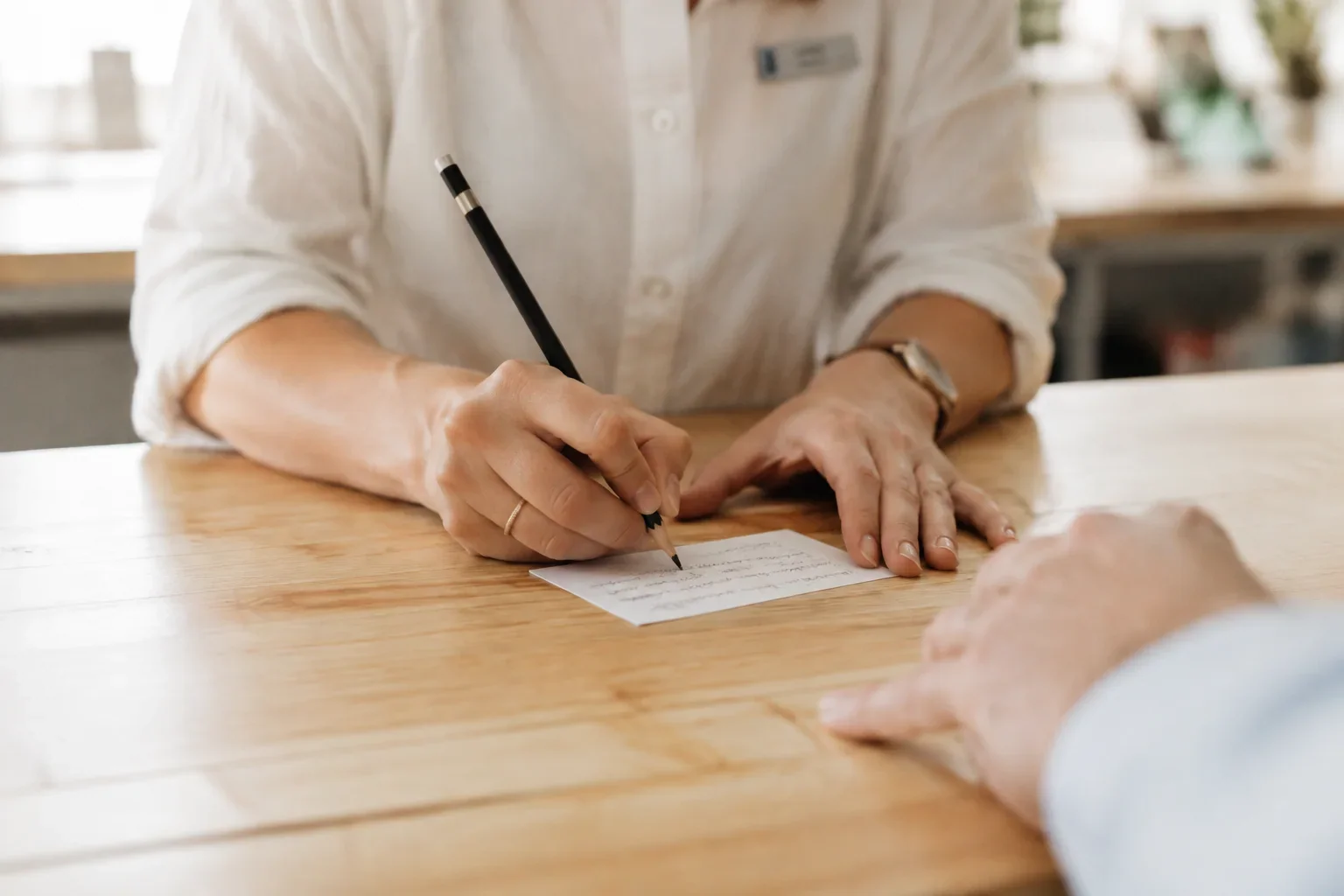
“¿Puede escribirlo, por favor?” means “Could you write it down, please?” It is useful for a detail that needs to be exact, such as a street name or appointment time. Make it clear which information you want written, especially if the conversation included several numbers.
If spelling is the issue, “¿Cómo se escribe?” means “How is it spelled?” That may be enough when you are writing the answer yourself. If the spoken letter names are also difficult, asking the other person to write the word can be more practical than repeating the spelling several times.
Read back the written detail when necessary. A note can still be ambiguous if you do not know which date or location it refers to. Point to the relevant part and ask a short confirming question. Writing changes the format of the information; it does not remove the need to understand what the information means.
For a realistic exercise, practice a hotel departure time or a destination name. The hotel guide includes questions where a written answer may help. Use fictional details in practice so you can focus on the exchange rather than real booking information.
Confirm the part you think you understood
A confirmation question lets the other person correct your interpretation. If you think the time is ten, “¿A las diez?” means “At ten?” If you think the turn comes after a bridge, “¿Después del puente?” means “After the bridge?” Use a questioning tone and wait for the answer.
Keep the confirmation tied to the original question. Repeating a number alone can be ambiguous when the conversation includes a room number, a price, and a time. A short phrase such as “a las diez” identifies the kind of information you are checking.
You can add “¿verdad?” to a statement to ask whether it is right. Use it when you can form the statement clearly enough to be checked. Do not turn a guess into a confident conclusion simply because the other person is waiting. It is more useful to identify your uncertainty than to continue with the wrong plan.
When practicing directions, mark the route you think you heard and ask about one uncertain step. The directions guide shows how landmarks and confirmation work together. You are checking a shared understanding, not trying to repeat every word exactly.
Explain the help you need beyond the language
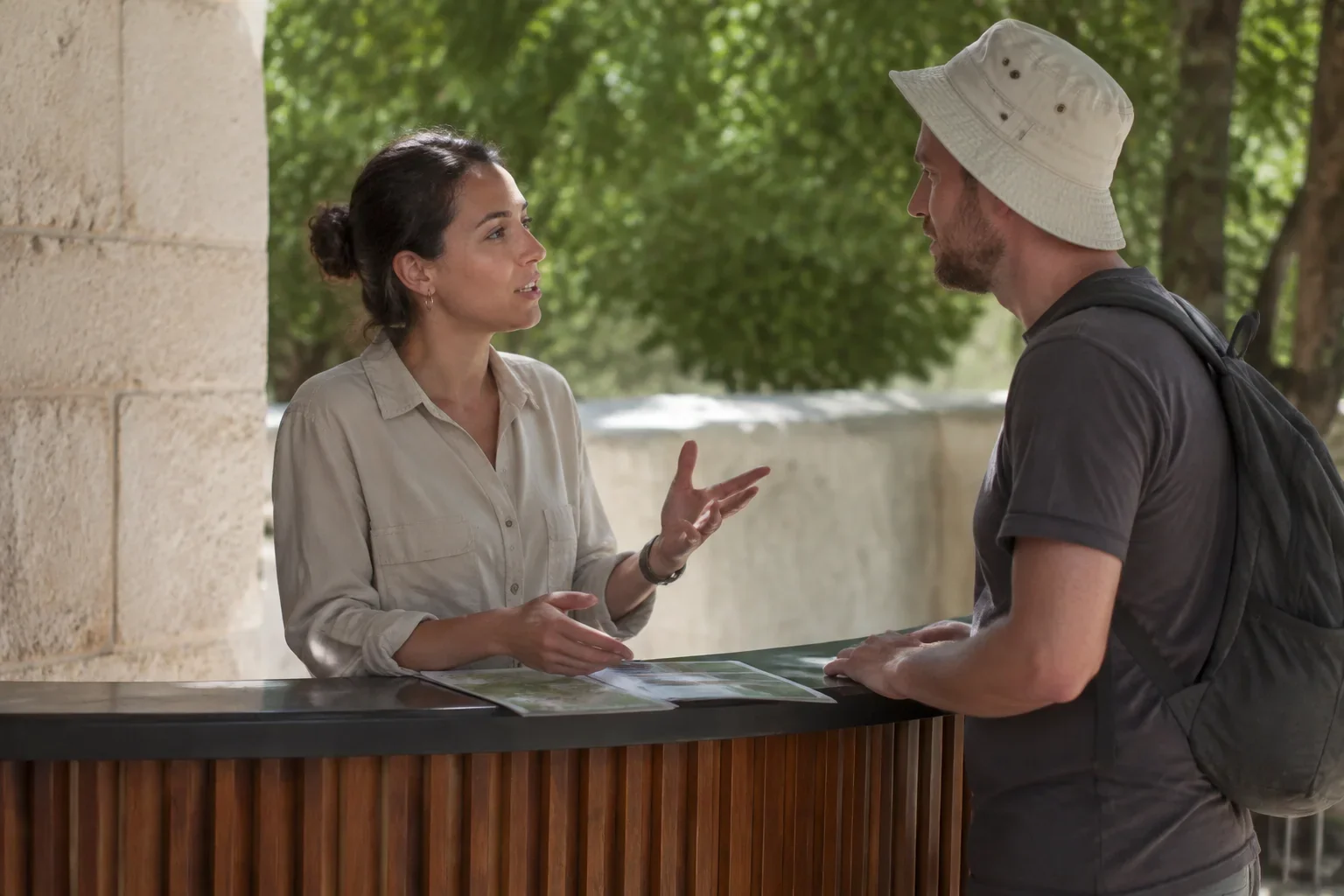
“¿Puede ayudarme, por favor?” opens a general request, but the next sentence should explain the task. “Busco la estación” means “I'm looking for the station.” “La tarjeta no funciona” means “The card doesn't work.” Each gives the other person a practical starting point.
If you need an object or action, ask for that directly when you know how. “¿Me puede traer una silla, por favor?” means “Could you bring me a chair, please?” It tells the listener what help would look like, rather than leaving them to guess from a general statement.
The examples here use polite singular forms with “puede.” In an informal exchange, you may hear or use “puedes.” Choose the form that fits the relationship and local usage. You do not have to master every form before making a clear request, but it helps to know why another speaker's version may sound slightly different.
If you cannot produce the full explanation, use the most useful words and a gesture, then answer the person's follow-up. A shorter message can still establish the need. The guide to freezing while speaking gives you ways to preserve the message when the sentence you planned becomes unavailable.
Practice clarification as a normal turn
Include one unclear detail in a practice conversation on purpose. Ask a partner to give a time you must confirm, use an unfamiliar menu word, or describe a route a little too quickly. Your goal is to choose the kind of help that fits, then use the clarified answer.
Do not stop the roleplay as soon as you say the repair phrase. The next part matters: listen to the new answer and continue the original task. If you asked for a café choice to be repeated, actually choose the drink or location. If you asked for a written time, confirm the arrangement.
For solo work, use a recording and pause after the part you did not understand. Say the request you would make, then check a transcript or clearer model. The solo speaking guide explains how to practice questions without simply reading a script.
After the session, save one useful request with the situation that calls for it. You do not need all five repair phrases in every conversation. What matters is being able to select the one that changes the exchange in a useful way and then return to what you were trying to do.
- Start a small scene such as an order, introduction, or hotel question.
- Identify whether the gap is sound, speed, meaning, or an exact detail.
- Ask for the kind of help that matches that gap.
- Listen to or read the clarified information.
- Confirm any detail that still affects your decision.
- Complete the original task, then repeat with a different kind of difficulty.
Common questions
How do I politely ask for help in Spanish?
Say “¿Puede ayudarme, por favor?” meaning “Could you help me, please?” Then explain what you need, such as finding a place or resolving a problem. A specific next sentence makes it easier for the other person to provide useful help.
What does “más despacio” mean?
It means “more slowly.” In a conversation, “Más despacio, por favor” asks the person to speak more slowly. Use it when pace is the problem; if a word itself is unfamiliar, ask about its meaning as well.
Is “no entiendo” rude?
It is a direct statement meaning “I don't understand.” Tone and context matter. You can make the request clearer and polite by adding “Perdón” and a specific phrase such as “¿Puede repetir, por favor?” The other person then knows what would help you continue.
When should I ask for writing instead of repetition?
Writing can help when you need an exact name, address, time, or code and another spoken version remains difficult. Say “¿Puede escribirlo, por favor?” and identify the detail you mean. Confirm what the written information refers to before continuing.
How can I practice asking for clarification?
Build one unclear detail into a short roleplay and choose a request that fits the problem. Then continue the original task using the clarified answer. Practicing only the repair phrase misses the important step of understanding the response and returning to the conversation.
Sources and further reading
Related Spanish phrases
Finding your way
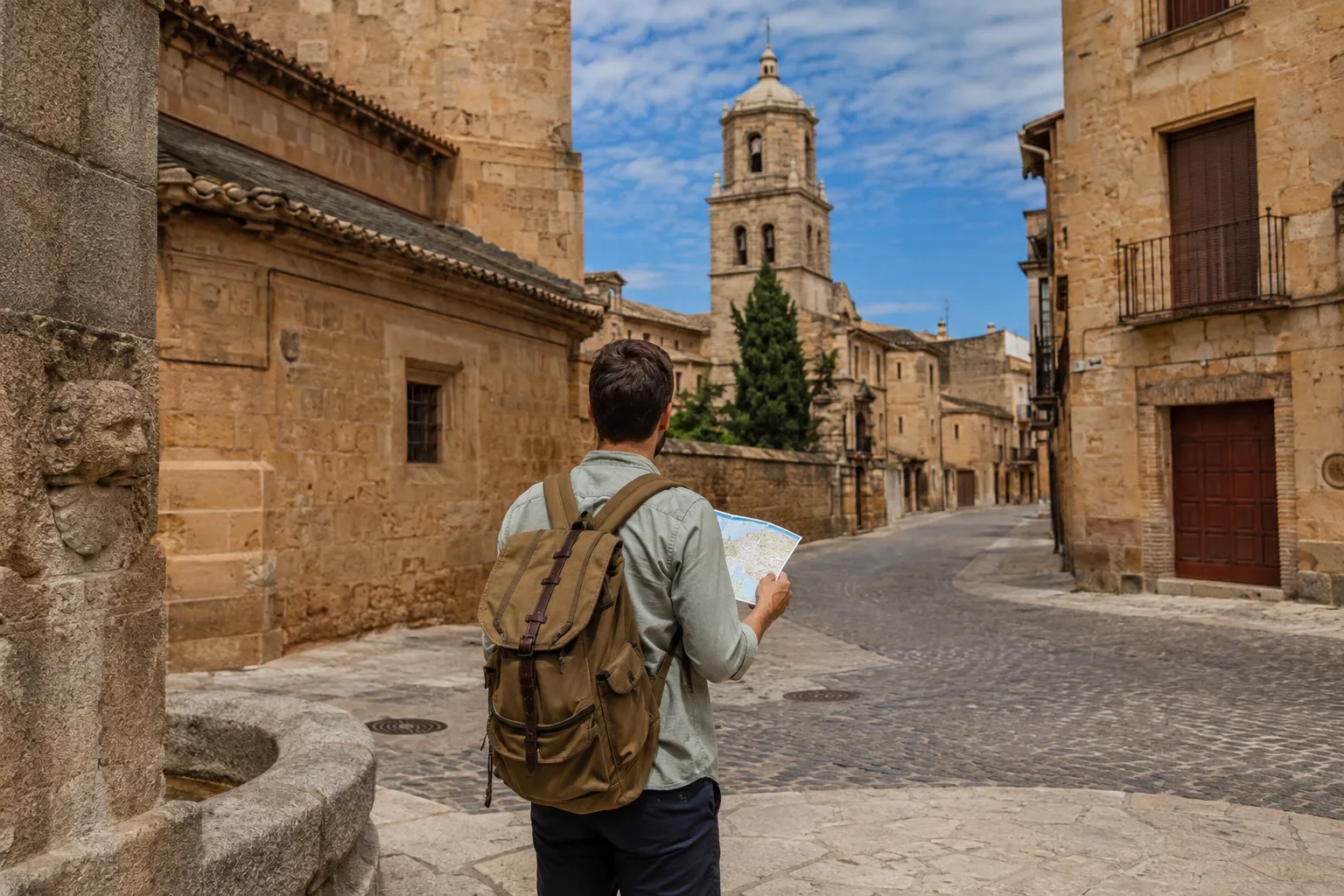
Ask where the station is and recognize left, right, and straight ahead.
Explore the phrases
Checking in
Explain that you have a reservation and ask about your stay.
Explore the phrases
Your first hello
Say your name and ask an informal conversation partner theirs.
Explore the phrases
Shopping for clothes
Find an item, describe its fit and ask for a useful alternative.
Explore the phrasesMore practice guides
 Speaking 9 min read
What to do when you freeze mid-sentence
Keep a conversation moving when a word disappears. Try a shorter reply, ask for help, and rehearse a small interruption in the language you are learning.
Read the guide Listening 10 min read
How to practice listening for meaning
Practice listening without catching every word. Give a short recording one question to answer, find what you missed in the transcript, and listen again.
Read the guide Spanish speaking 9 min read
How to practice speaking Spanish alone
Practice Spanish speaking alone with short roleplays, recordings, and useful prompts. Learn how to choose examples and move beyond reading a script aloud.
Read the guide