How to ask for directions in Spanish
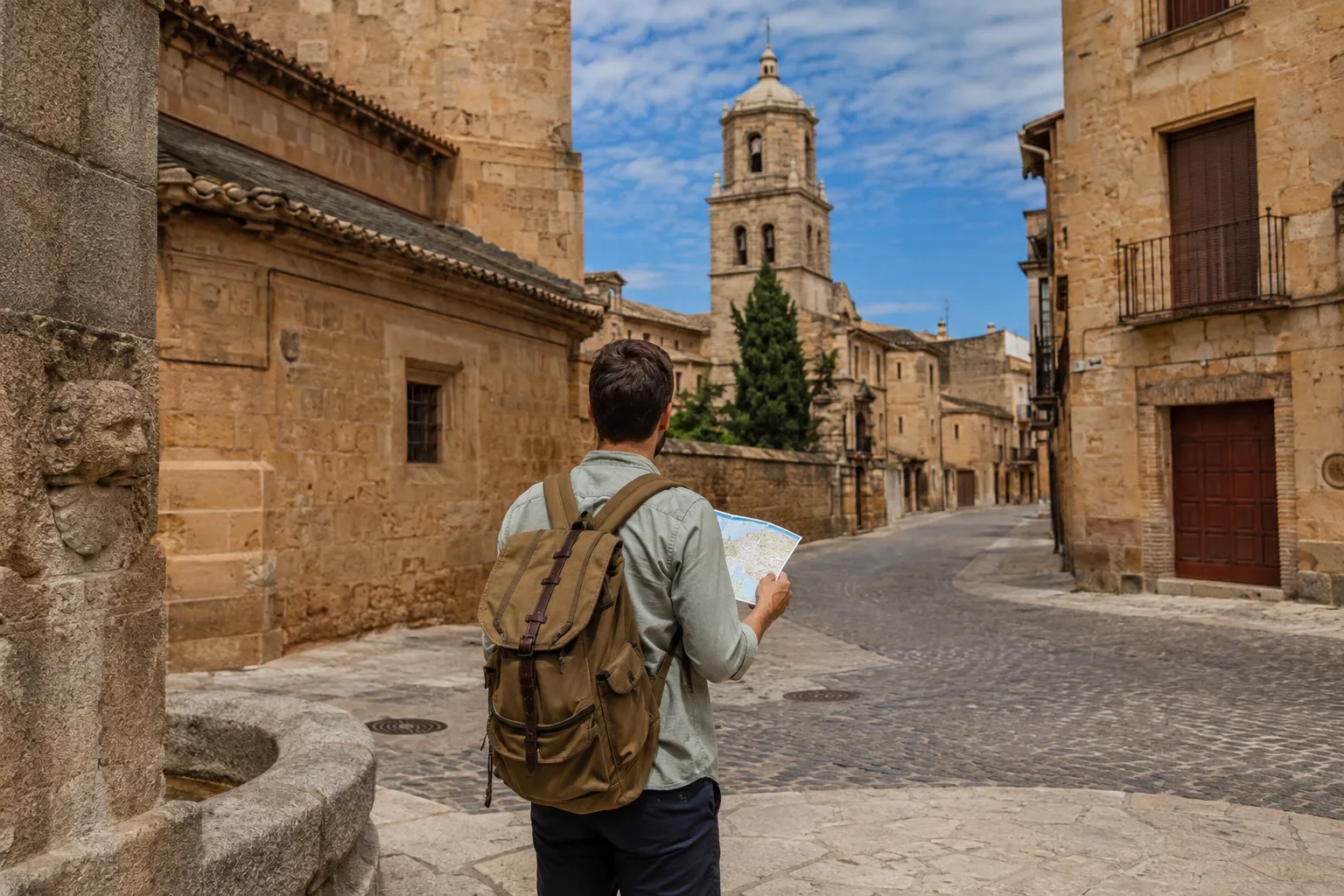
To ask for directions in Spanish, begin with “Perdón” and ask “¿Dónde está…?” followed by the place you need. Then listen for the first action and landmark, and confirm any turn or location you did not understand before moving on.

Quick answer
“Perdón, ¿dónde está la estación?” means “Excuse me, where is the station?” Listen for “a la derecha” (to the right), “a la izquierda” (to the left), and “todo recto” (straight ahead). Ask for a map point or repeat the uncertain step instead of guessing the route.
In this guide
Five phrases to have ready
Disculpe, ¿dónde está la estación?
Excuse me, where is the station?
A polite question for someone you do not know.
A la derecha.
To the right.
One direction you may hear in the answer.
A la izquierda.
To the left.
Listen carefully for the longer word “izquierda.”
Todo recto.
Straight ahead.
A common direction; you may also hear “derecho” in some regions.
¿Está cerca?
Is it nearby?
Check whether the destination is close.
A short conversation
Disculpe, ¿dónde está la estación?
Excuse me, where is the station?Todo recto y luego a la derecha.
Straight ahead and then to the right.¿Está cerca?
Is it nearby?Sí, a cinco minutos a pie.
Yes, five minutes on foot.Name the destination clearly
A useful opening is “Perdón, ¿dónde está la estación?” It means “Excuse me, where is the station?” The greeting gets the person's attention and the question identifies what you need. If you are looking for a particular station, add its name or show the destination on a map.
Be specific when a generic place could mean several things. A city may have more than one railway station, museum, or bus terminal. Knowing the street address or official name can prevent a perfectly understood question from leading to the wrong destination. You can show written information without needing to pronounce an unfamiliar proper name perfectly.
“¿Cómo llego a…?” means “How do I get to…?” and asks more directly for a route. “¿Cómo llego al museo?” means “How do I get to the museum?” Notice “al” in that example, the combination of “a” and “el.” With a feminine noun, the phrase remains “a la,” as in “a la estación.” Learn the full question you need instead of guessing the small connecting words.
Listen for one instruction at a time
Directions often combine an action, a landmark, and another action. You might hear an instruction to go straight, pass a square, and then turn left. If you hold only the words “square” and “left,” you may miss whether the turn comes before or after the square.
Start by identifying the first thing to do. “Siga todo recto” means “Go straight ahead” in a polite form. “Gire a la derecha” means “Turn right.” You may hear informal forms such as “sigue” or “gira” too. For listening, recognizing the action and its direction matters more than explaining the verb form on the spot.
Do not try to repeat a long route silently while the person is still adding instructions. Ask to confirm a useful section, or ask them to point to the route. Our listening guide explains how to listen for relationships between details, including the words that change the order of actions.
| Spanish | Meaning | What to check |
|---|---|---|
| a la derecha | to the right | Which turn or side is meant |
| a la izquierda | to the left | Whether it happens before or after the landmark |
| todo recto | straight ahead | How far to continue or what to pass |
| al lado de | next to | Which building or place is the reference |
| enfrente de | opposite / across from | The place on the other side |
| antes de / después de | before / after | The order of the landmark and the turn |
Connect the instruction to a landmark
A landmark gives you a way to recognize the route while walking. “La plaza” means the square, “el puente” means the bridge, and “el banco” can mean the bank in this context. A familiar noun is useful only if you know how it relates to the instruction.
“Después del puente” means “After the bridge.” “Antes del puente” means “Before the bridge.” The difference is small in the sentence and large on the street. If that part was unclear, repeat it as a question: “¿Después del puente?” for “After the bridge?” Let the person confirm or correct you.
Prefer a landmark you can identify. If someone refers to a local business you do not recognize, ask them to show it on the map or explain where it is. You can also ask about a visible feature instead. The objective is a shared reference point, not proof that you know every place name in the neighborhood.
When practicing, use a simple map with a few distinct places. A crowded tourist map can make the task harder for reasons unrelated to Spanish. Add detail when you can already follow the relationship between one action and one landmark.
Ask whether you can walk there
“¿Está lejos?” means “Is it far?” It is a useful first question, but “far” depends on the speaker and the situation. Follow it with “¿Se puede ir andando?” for “Can you walk there?” when you need to know whether walking is a practical option.
You can ask “¿Cuánto se tarda andando?” meaning “How long does it take on foot?” Listen for the time and the mode of travel together. A number of minutes without that context may describe a bus trip rather than a walk. Confirm the part that affects your decision.
If the answer suggests transport, do not try to improvise an entire transit plan from a few recognized words. Ask for the relevant stop, route number, or destination in writing, then check current local information. This guide helps with the language of the exchange; actual routes and service conditions depend on where and when you are travelling.
In a practice scene, give the question a reason. Perhaps you have time to walk but need to know whether the station is nearby. That makes the reply meaningful and helps you choose a follow-up, rather than asking a memorized question whose answer you ignore.
Use a map to confirm the route
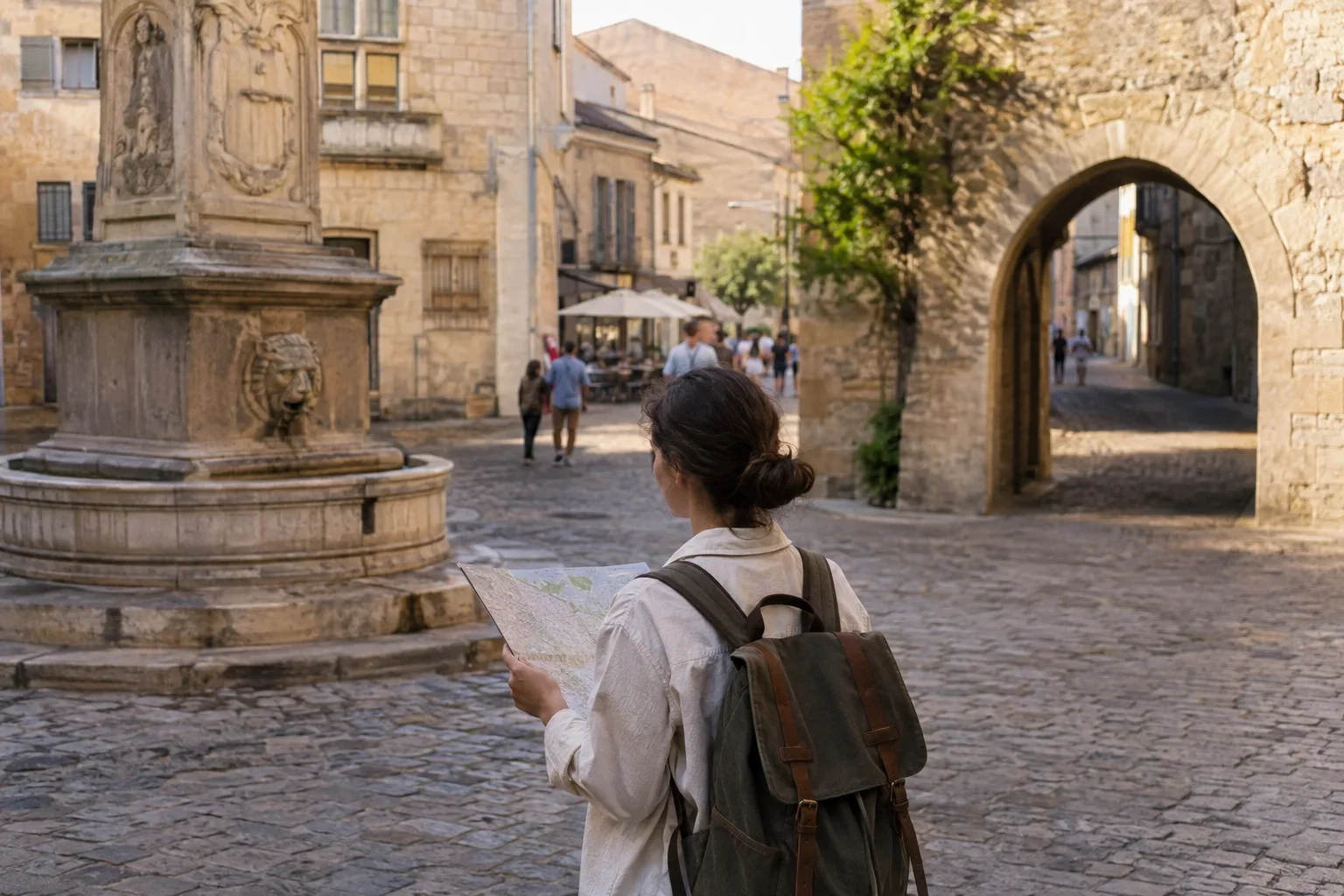
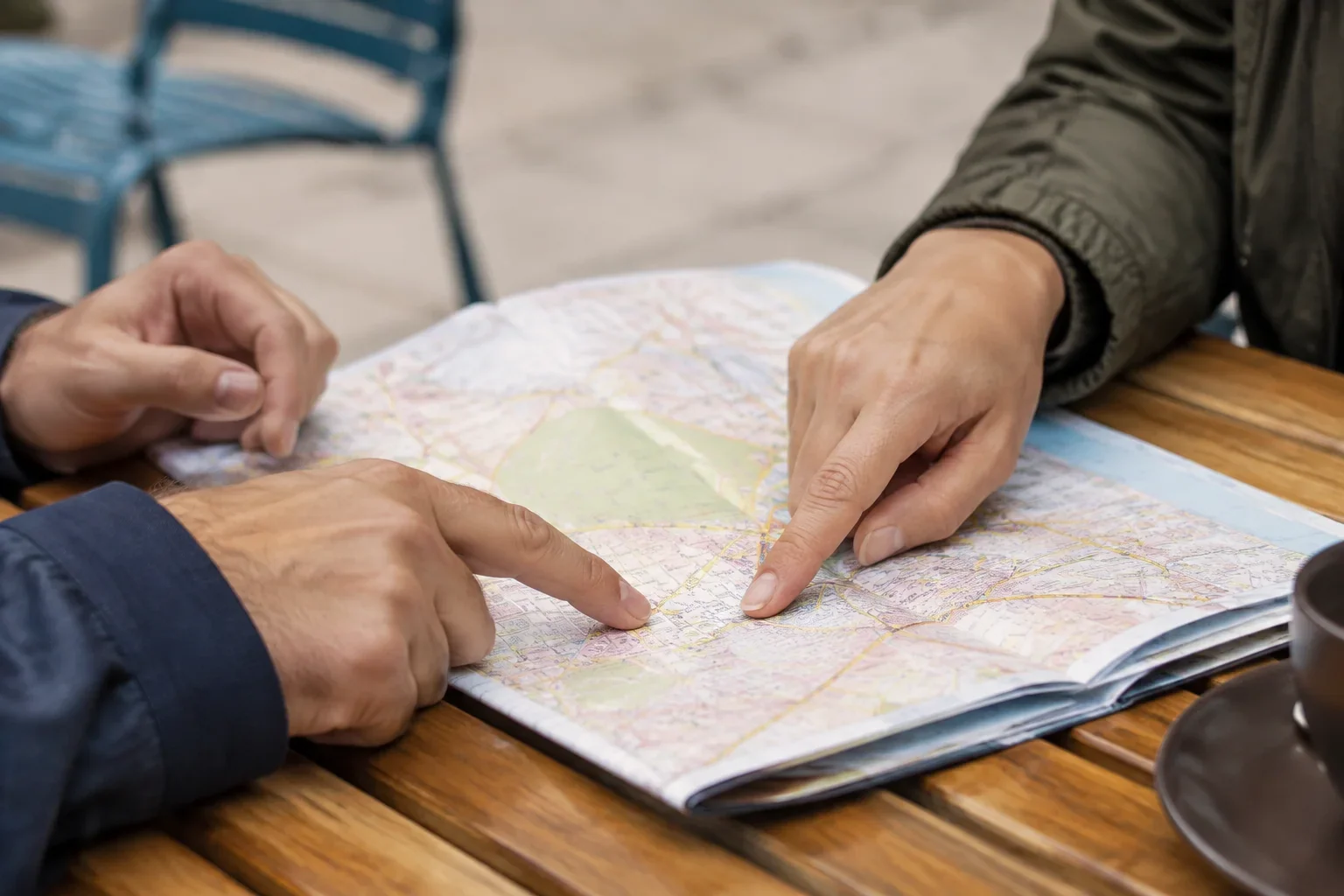
“¿Puede señalarlo en el mapa?” means “Could you point it out on the map?” Show the map so the person can see your starting point and destination. If you are using a phone, choose a view that makes the relevant area visible before asking.
A gesture can clarify a place, but check the route if that is what you need. Someone might point at the destination without showing which entrance or street to use. “¿Por aquí?” means “This way?” and can accompany a clear gesture toward the route you understood.
When you repeat the route, use short pieces. “Todo recto y después a la izquierda, ¿verdad?” means “Straight ahead and then left, right?” The final “¿verdad?” asks for confirmation. Give the person a chance to correct the sequence before you leave.
The written map and spoken explanation can support each other. You have not failed at Spanish by using both. In practice, cover the route line on a map, listen to a short instruction, and draw the path you understood. Then compare the route, not just your memory of the sentence.
Recover when the explanation is too fast
Use “¿Puede repetir, por favor?” for “Could you repeat, please?” If the same speed remains difficult, “Más despacio, por favor” means “More slowly, please.” A specific request helps the other person change the part of the explanation that is causing trouble.
If you understood the first step but lost the second, ask about that section rather than restarting the whole conversation. You can repeat a landmark with questioning intonation or ask the person to show the next turn. This reduces the amount of information you need to hold at once.
Be honest about what remains unclear. A polite nod can be interpreted as understanding, and you may lose the chance to ask a useful follow-up. The help phrases guide gives you ways to request repetition, slower speech, or writing. If the difficulty is producing your own question, use a short version and the destination name, then build from there.
Avoid the small confusions that change the route
“Derecha” and “derecho” can be confusing when you have learned both as forms related to “right.” In directions, “a la derecha” means to the right. You may hear “derecho” used for straight ahead in some places. Learn the complete expression and use “todo recto” as one clear model for going straight.
Similarly, “cerca” means near and “lejos” means far, but neither gives an exact distance. Ask a follow-up if the distinction matters. A route that is close for a local driver may not be close for someone walking with luggage. The important information comes from the situation, not only the dictionary translation.
Do not confuse recognizing a noun with understanding the route. “Estación,” “puente,” and “izquierda” are useful words, but they do not tell you whether the station is before the bridge or whether you turn left after it. Keep the connecting phrase in your review note.
For vocabulary practice, save whole location phrases such as “después del puente” rather than isolated words alone. Our Spanish vocabulary guide explains how to attach a phrase to a meaningful prompt. If a misunderstood turn becomes a recurring problem, use mistake review to build a fresh route question around that distinction.
Practice with a route you can check
Draw a small map with a café, square, bridge, and station. Choose a starting point and one destination. Ask for directions aloud, then have a partner describe two or three steps. Trace what you understood before looking at a written version.
For solo practice, record checked instructions and leave time to mark the route. Change the destination on a later attempt so the map does not supply the answer from memory. The solo speaking guide has a method for turning written questions into prompts you can answer without a script.
Include one clarification on purpose. Ask whether the turn comes before or after the bridge, or ask the speaker to point out the station. You are practicing how to reach agreement about a route, not only how to pronounce the opening question.
Finally, connect the street scene to an indoor one. At a hotel, you might ask where breakfast is served or where to find the lift. The hotel phrase guide uses the same skill of locating a place, with different practical details to confirm.
- Name a destination and ask where it is.
- Identify the first action and its landmark.
- Trace the route you heard on a simple map.
- Ask one question about an uncertain turn or distance.
- Repeat the understood route for confirmation.
- Change the destination and try again without the written instructions.
Common questions
How do I ask “Where is the station?” in Spanish?
Say “¿Dónde está la estación?” You can begin with “Perdón” for “Excuse me.” Add the station name or show it on a map when there is more than one possible destination. A clear place name helps the person give you the right directions.
What are left and right in Spanish directions?
“A la izquierda” means to the left, and “a la derecha” means to the right. Practice them with an action or landmark, such as turning after a bridge. Knowing the side alone may not tell you which junction the speaker means.
How do I ask someone to point on a map?
Use “¿Puede señalarlo en el mapa?” meaning “Could you point it out on the map?” Show a clear starting point and destination. If they only identify the place, ask about the route or entrance you still need to understand.
Do “derecho” and “a la derecha” mean the same thing?
Not necessarily. “A la derecha” means to the right. In some direction-giving contexts, “derecho” means straight ahead. Listen to the complete expression and confirm when it is unclear; “todo recto” is another useful expression for straight ahead.
What should I do if I forget the route immediately?
Ask to confirm the first useful section, or request a map point before leaving. You can repeat a short sequence and let the speaker correct it. When practicing, work with a small map and a few steps, then increase the amount of information gradually.
Sources and further reading
Related Spanish phrases

When you need a hand
Ask someone to repeat or slow down without switching the entire conversation to English.
Explore the phrases
Checking in
Explain that you have a reservation and ask about your stay.
Explore the phrases
At the café
Order a drink and answer whether you are staying or taking it away.
Explore the phrases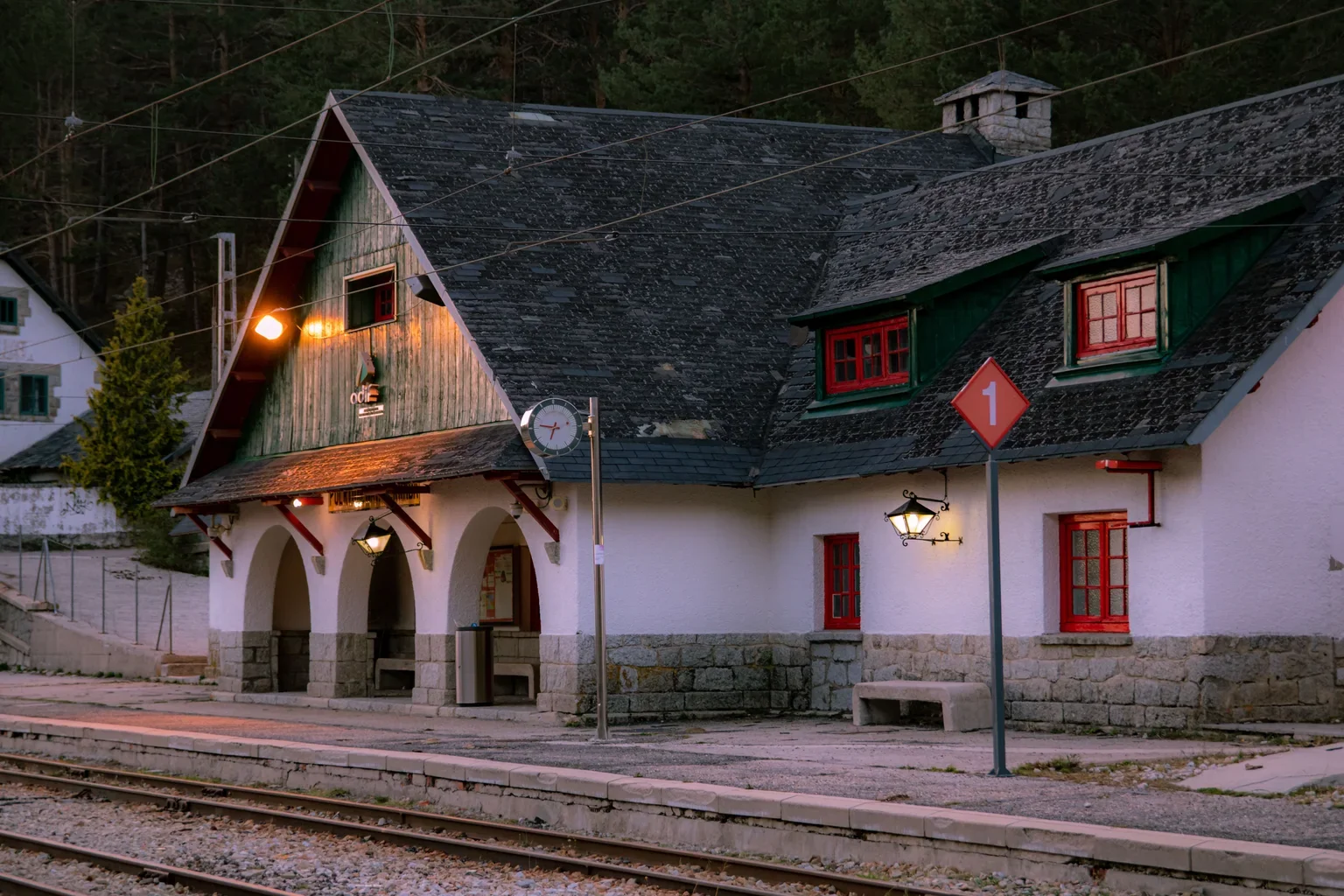
Buying train tickets
Choose a journey and confirm the details before paying.
Explore the phrasesMore practice guides
 Listening 10 min read
How to practice listening for meaning
Practice listening without catching every word. Give a short recording one question to answer, find what you missed in the transcript, and listen again.
Read the guide Spanish speaking 9 min read
How to practice speaking Spanish alone
Practice Spanish speaking alone with short roleplays, recordings, and useful prompts. Learn how to choose examples and move beyond reading a script aloud.
Read the guide Spanish vocabulary 9 min read
How to remember Spanish vocabulary for speaking
Remember Spanish vocabulary with useful phrases, hidden-answer prompts, and spaced review. Learn how to move from recognizing a word to using it in a reply.
Read the guide