Spanish train ticket phrases for your journey
To buy a train ticket in Spanish, give the destination and travel day, then say whether you need a one-way or return ticket. Before paying, confirm the departure time and whether you need to change trains. This guide uses station language for a trip in Spain, with short exchanges you can adapt to your own journey.

Quick answer
Start with "Un billete a Toledo para mañana, por favor" (A ticket to Toledo for tomorrow, please). Answer "Solo ida" (One way) or "Ida y vuelta" (Round trip). Then check "¿Es directo?" (Is it direct?) and "¿A qué hora sale?" (What time does it leave?). Times and journeys below are practice examples, not a timetable.
In this guide
Five phrases to have ready
Un billete a Toledo para mañana, por favor.
A ticket to Toledo for tomorrow, please.
Give the destination and travel day together.
Solo ida, por favor.
One way, please.
Use this when you do not need a return journey.
¿A qué hora sale?
What time does it leave?
Ask for departure, not arrival.
¿Tengo que cambiar de tren?
Do I have to change trains?
This asks about a transfer during the journey.
¿De qué vía sale?
Which track does it leave from?
Check the station signs for the service you selected.
A short conversation
Un billete a Toledo para mañana, por favor.
A ticket to Toledo for tomorrow, please.¿Solo ida o ida y vuelta?
One way or round trip?Solo ida. ¿Hay uno por la mañana?
One way. Is there one in the morning?Sí. ¿Quiere ver los horarios?
Yes. Would you like to see the times?Sí, por favor.
Yes, please.Give the destination, day and number of travelers
Prepare three details before approaching the ticket counter: where you are going, which day you want to travel, and how many people need tickets. You can keep these on your phone. Read the place name from your phone if that helps you make the request clearly.
For one traveler, say "Un billete a Toledo para mañana, por favor" (A ticket to Toledo for tomorrow, please). For two, say "Dos billetes a Toledo para mañana, por favor" (Two tickets to Toledo for tomorrow, please). Here, "a Toledo" gives the destination and "para mañana" gives the travel day. If you are buying ahead, show the actual date as well.
You may be asked "¿Para cuántas personas?" (For how many people?). Answer "Para dos adultos" (For two adults), if that matches your group. If a child is traveling, give the real age when asked. Do not assume a discount applies just because you know the word for child; the seller needs the details for that service.
The RAE lists a transport-ticket meaning for billete. That is the word used throughout this Spain-focused guide. Your reservation may also show a booking reference. Keep that reference visible if you already bought online, because asking to retrieve an existing ticket is a different job from buying a new one.
Choose one way or return before adding extras
The seller may shorten the question to "¿Solo ida o ida y vuelta?" (One way or round trip?). A short answer is enough. "Solo ida, por favor" means "One way, please." "Ida y vuelta, por favor" means "Round trip, please." Neither answer tells the seller when you want to return, so expect another question if you choose a return journey.
For a simple practice booking, use "La vuelta, el domingo por la tarde" (The return journey, on Sunday afternoon). If you need a particular departure, say "Quiero volver sobre las seis" (I want to return around six). "Sobre" leaves room for a nearby time; it does not request an exact six o'clock departure. Ask to see the available options before selecting one.
Listen for whether the person is asking about your outward trip or your return. Repeating "La ida, mañana; la vuelta, el domingo" (Outward tomorrow; return on Sunday) can clear up a mix-up. Once those details are correct, move on to the departure time. Trying to request every preference in one long sentence makes an error harder to locate.
If you are staying overnight, compare the travel dates with your accommodation booking. Our hotel check-in guide explains how to confirm the name and dates on a reservation. For this exchange, having both confirmations on screen is more useful than learning a complicated explanation of your entire trip.
Separate departure time from arrival time
Two small verbs carry a large difference: "sale" means "it leaves" and "llega" means "it arrives." Ask "¿A qué hora sale?" (What time does it leave?) for departure. Ask "¿A qué hora llega a Toledo?" (What time does it arrive in Toledo?) for arrival. Naming the destination in the second question helps when several places have been mentioned.
Suppose the answer is "Sale a las nueve y llega a las diez y media" (It leaves at nine and arrives at ten thirty). You do not need to repeat every word. Confirm "Entonces, sale a las nueve, ¿verdad?" (So it leaves at nine, right?). Point to the departure field if you are checking a screen or printed ticket.
Timetables may display 24-hour times. When you see 18:30, connect it with six thirty in the evening rather than six thirty in the morning. If the spoken answer is unclear, ask "¿Me puede enseñar la hora?" (Could you show me the time?). Read the date beside the time too. A perfectly understood hour on the wrong day still gives you the wrong journey.
For practice, write two columns labeled departure and arrival. Have a partner read a sentence containing both. Put each time in the right column before you answer. This makes the listening goal concrete. The broader guide to listening without catching every word helps you focus on the detail a question actually requires.
Ask whether you must change trains
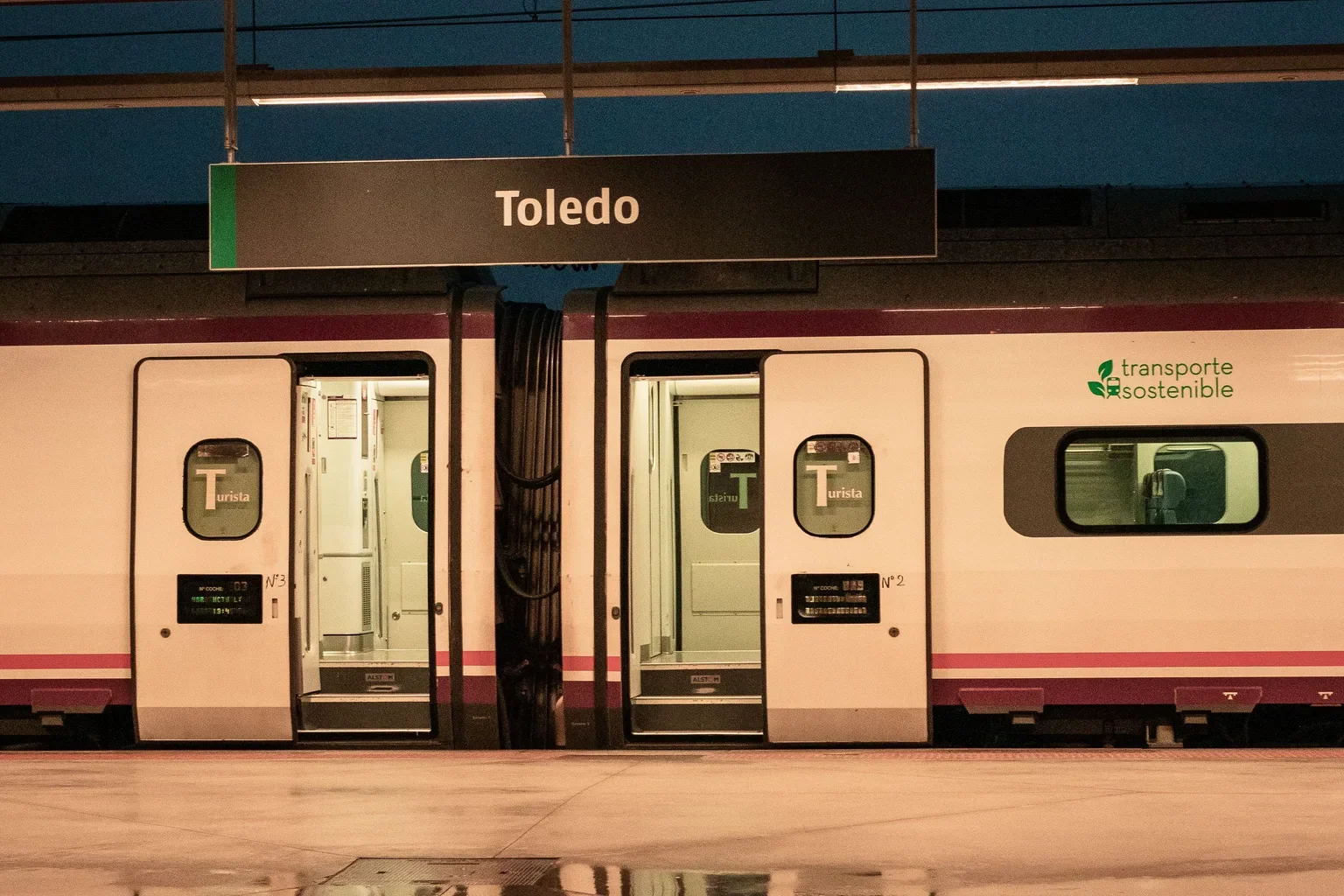
Before choosing a service, check whether you stay on the same train for the whole journey. Ask "¿Es directo?" (Is it direct?) or "¿Tengo que cambiar de tren?" (Do I have to change trains?). The second question is especially clear because it names what you would be changing. You are asking about the journey, not asking to modify a ticket you already bought.
If the answer is "Tiene que cambiar en Córdoba" (You have to change in Córdoba), follow with "¿Cuánto tiempo tengo para cambiar?" (How much time do I have to change trains?). Then ask to see the connection details. You need the station and onward service, not just reassurance that a transfer exists.
"Quiero cambiar el billete" means "I want to change the ticket." That starts a different conversation about altering a booking. For that request, the ticket type and seller matter. Renfe's published conditions set out service and fare rules; use the conditions for your actual purchase rather than assuming every ticket is changeable.
Keep the two meanings separate during rehearsal. In one round, you have not bought anything and need to know whether the journey involves a transfer. In another, you have a ticket but want a different departure. Say the sentence that fits each problem. The shared verb "cambiar" is not enough by itself to express which help you need.
Check the platform, carriage and seat separately
At the station, several numbers may appear close together. A track number tells you where the train runs, a carriage number identifies one part of the train, and a seat number identifies your place inside it. Reading one number correctly does not mean you have found all three. Check the labels beside the numbers.
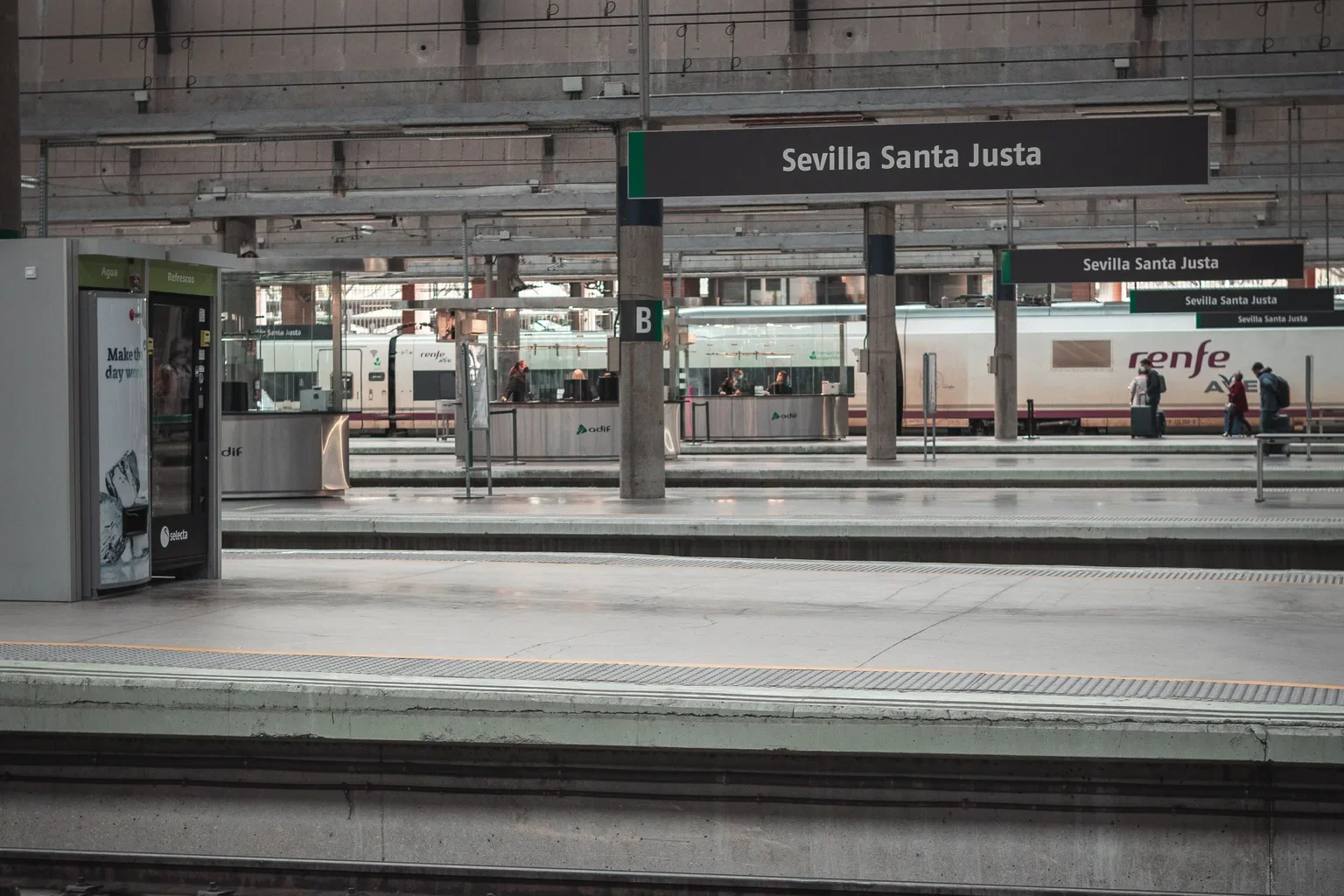
An andén is the platform where passengers wait and board. "Vía" refers to the track. Signs and announcements may direct you using the track number, so notice the actual station wording. Ask "¿De qué vía sale el tren a Toledo?" (Which track does the train to Toledo leave from?) when that is the information you need.
If your ticket lists a carriage and seat, confirm "¿Este es el coche cuatro?" (Is this carriage four?) before looking for your place. Inside, ask "¿Este es el asiento doce?" (Is this seat twelve?). These are illustrative numbers. Do not infer a carriage or seat reservation when your ticket does not show one.
If someone appears to be in your seat, start by checking both tickets instead of accusing them. "Perdone, ¿podemos comprobar los asientos?" means "Excuse me, can we check the seats?" You might have the right seat number in the wrong carriage. That possibility is easier to resolve when you compare the labels calmly.
| Spanish | English | When it helps |
|---|---|---|
| ¿Dónde está el andén? | Where is the platform? | Finding the boarding area. |
| ¿De qué vía sale? | Which track does it leave from? | Checking the departure track. |
| ¿Este es el coche cuatro? | Is this carriage four? | Finding a numbered carriage. |
| ¿Este es el asiento doce? | Is this seat twelve? | Checking a numbered seat. |
Handle an unavailable train without losing the thread
You ask for a morning train and hear "No quedan plazas" (There are no seats left). This is an availability answer. You can respond "¿Hay otro tren por la mañana?" (Is there another train in the morning?). If the only alternative is later, ask about that departure before deciding whether it works for you.
Here is a separate practice exchange. You say "Quiero salir antes de las diez" (I want to leave before ten). The seller answers "A las nueve no quedan plazas. Hay uno a las diez y veinte" (There are no seats left at nine. There is one at ten twenty). You reply "Ese sale demasiado tarde. ¿Hay uno más temprano?" (That one leaves too late. Is there an earlier one?). The offered service did not meet your limit, so saying yes would change your plan.
If you did not catch the alternative, ask for that detail: "¿A las diez y cuánto?" (At ten what?). A targeted question lets the person repeat the missing minutes without restarting the entire conversation. For other ways to repair a missed answer, use our Spanish help and repetition phrases.
Before paying, point to the final option and confirm the destination, date and departure. Ask "¿Cuánto es en total?" (How much is it in total?) when you need the full price. Check the amount shown for your selected service and ask about any part of the booking that is still unclear.
Rehearse with a ticket you can read back
Create a practice card with a destination, date, outward time and return choice. Add a transfer only on the second attempt. Your partner plays the seller and deliberately offers one detail that does not match the card. Your job is to notice it, ask a useful follow-up, and finish with the correct journey.
Working alone, write the seller's reply on another card and turn it over after making your request. Use a reply such as "¿Solo ida?" (One way?) or "¿Por la mañana o por la tarde?" (In the morning or afternoon?). Respond to what the card asks. Avoid reading a memorized speech after every prompt; that would skip the listening decision.
Finish by explaining the selected ticket in English. State where you are going, when it leaves, and whether you change trains. If you cannot say those facts confidently, identify which question remains unanswered. Successful practice means understanding the booking you chose, even if your Spanish request was short.
Once the transaction feels manageable, add the walk to the station using our Spanish directions guide. Keep that as a separate practice scene. Combining it later gives you a small travel sequence without making your first ticket conversation unnecessarily long.
Can you catch the number?
Practice hearing prices, times, and numbers in a short listening round.
Try the free Spanish numbers trainer ↗Common questions
How do I ask for a one-way train ticket in Spanish?
Say "Un billete de ida a Toledo, por favor" (A one-way ticket to Toledo, please), changing the destination to your own. If the seller asks whether you want a return, "Solo ida" (One way) is enough. Add the travel date before choosing a departure.
What does ida y vuelta mean?
"Ida y vuelta" means an outward and return journey, or round trip. It does not specify the return day or time. Be ready to answer a separate question about when you want to come back, and check the two journeys on the booking.
Is vía the same as andén?
They refer to different things: "vía" is the track and "andén" is the platform beside it. A station may guide passengers using track numbers. Follow the signs for your service and check the destination as well as the number.
How do I ask whether a train is direct?
Use "¿Es directo?" (Is it direct?). To be more explicit, ask "¿Tengo que cambiar de tren?" (Do I have to change trains?). If a change is required, ask where it happens and check the onward service information.
What if I cannot understand the ticket seller?
Ask for one detail at a time. "¿Puede escribir la hora, por favor?" means "Could you write the time, please?" You can also show the destination on your phone. Confirm the final booking before paying rather than agreeing to an answer you did not understand.
Sources and further reading
Related Spanish phrases
Finding your way
Ask where the station is and recognize left, right, and straight ahead.
Explore the phrases
Checking in
Explain that you have a reservation and ask about your stay.
Explore the phrases
When you need a hand
Ask someone to repeat or slow down without switching the entire conversation to English.
Explore the phrasesMore practice guides
 Listening 10 min read
How to practice listening for meaning
Practice listening without catching every word. Give a short recording one question to answer, find what you missed in the transcript, and listen again.
Read the guide Spanish speaking 9 min read
How to practice speaking Spanish alone
Practice Spanish speaking alone with short roleplays, recordings, and useful prompts. Learn how to choose examples and move beyond reading a script aloud.
Read the guide Speaking 9 min read
What to do when you freeze mid-sentence
Keep a conversation moving when a word disappears. Try a shorter reply, ask for help, and rehearse a small interruption in the language you are learning.
Read the guide