Grocery shopping in Spanish, from stall to checkout
To buy groceries in Spanish, say what you need and how much, then check whether the quoted price is per item, per kilo, or for the whole purchase. "Medio kilo de tomates, por favor" means "Half a kilo of tomatoes, please." At checkout, short replies about bags and payment often matter more than a long list of food names.

Quick answer
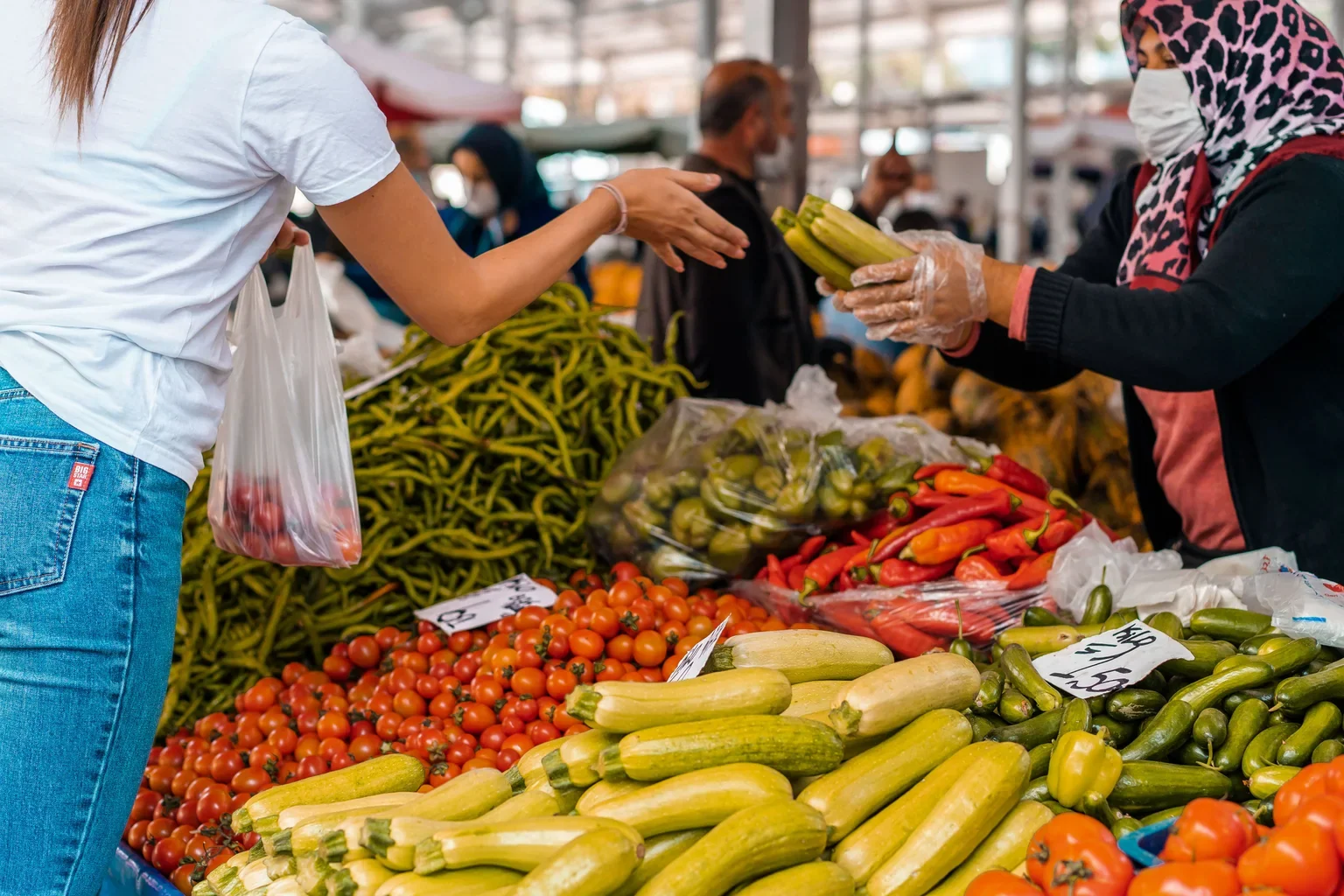
Ask "¿Dónde está el arroz?" (Where is the rice?) to find an item. At a counter, give the quantity with the product: "Doscientos gramos de queso, por favor" (Two hundred grams of cheese, please). Check "¿Cuánto es en total?" (How much is it in total?) before paying. The prices below are practice examples.
In this guide
Five phrases to have ready
¿Dónde está el arroz?
Where is the rice?
Use this when you need help locating a product.
Medio kilo de tomates, por favor.
Half a kilo of tomatoes, please.
Give the quantity and product together.
Un poco menos, por favor.
A little less, please.
Ask the seller to reduce a weighed amount.
¿Cuánto es en total?
How much is it in total?
Ask what you owe, rather than the rate per kilo.
No necesito bolsa, gracias.
I do not need a bag, thank you.
A short response when you have your own bag.
A short conversation
Doscientos gramos de queso, por favor.
Two hundred grams of cheese, please.Son doscientos veinte gramos. ¿Está bien así?
It is two hundred twenty grams. Is that all right?Un poco menos, por favor.
A little less, please.Ahora son doscientos gramos.
Now it is two hundred grams.Gracias. ¿Cuánto es?
Thank you. How much is it?Work out whether you choose the food or ask for it
A supermarket shelf and a staffed market counter call for different openings. At a shelf, you usually need help locating or identifying a product. At a counter, you may need to tell a seller what to select or weigh. Look at the setup before rehearsing a sentence that assumes the food is already in your basket.
To locate rice, ask "Disculpe, ¿dónde está el arroz?" (Excuse me, where is the rice?). A possible answer is "En el pasillo tres" (In aisle three). Repeat "¿En el tres?" (In three?) if you need to confirm the number. For a plural product, "¿Dónde están los huevos?" means "Where are the eggs?" The question follows the item you are looking for.
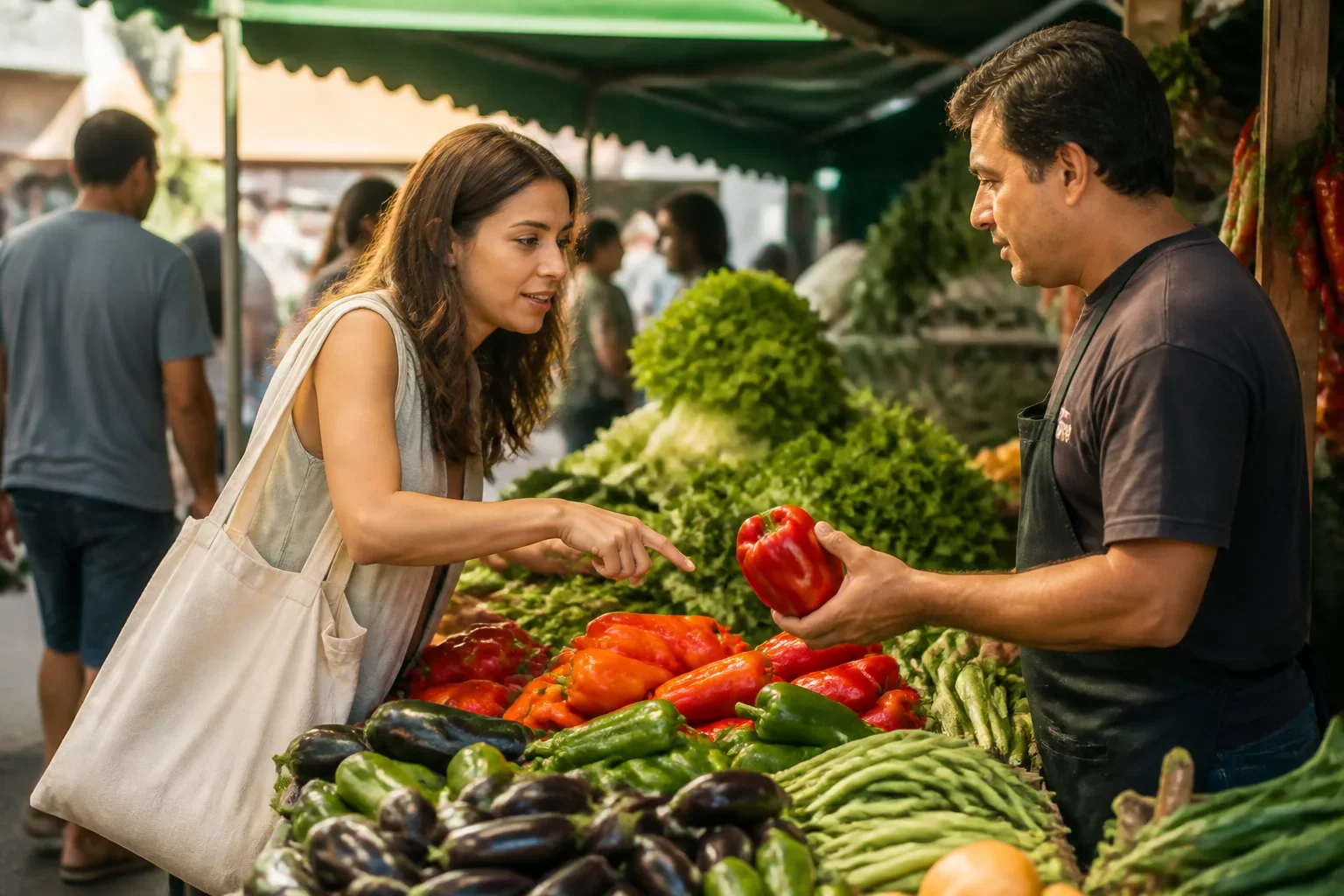
At a staffed counter, "Quisiera medio kilo de tomates, por favor" means "I would like half a kilo of tomatoes, please." You have supplied both the food and the amount. The seller might begin weighing or ask which tomatoes you mean. Point to the variety you want if there are several baskets.
Do not assume every stall allows customers to handle the produce or that every supermarket expects them to weigh it. You can ask "¿Puedo elegirlos yo?" (Can I choose them myself?), referring to the tomatoes, or wait for the seller to help. The language lets you find out how that particular shop works.
Choose units that describe the amount you need
Some foods are easiest to request by count, others by weight or package. "Tres manzanas" means "three apples." "Una botella de agua" means "a bottle of water." "Un paquete de arroz" means "a packet of rice." Saying the container or amount prevents the seller from having to infer whether you want one piece or enough for several meals.
A kilo is a kilogram. "Medio kilo" is half a kilo, and "un cuarto de kilo" is a quarter. If you prefer a specific number, "doscientos cincuenta gramos" means "two hundred fifty grams." Pick the amount that fits your purchase. You do not need to calculate an unfamiliar unit aloud while someone waits.
A docena contains twelve units. "Media docena de huevos" means "half a dozen eggs," or six. That expresses an amount, not a guarantee that the shop sells loose eggs or has six-egg cartons. If the available pack contains twelve, decide whether you want that pack rather than assuming the seller can divide it.
The word "de" links the amount or container to the food in these examples: "un kilo de zanahorias" (a kilo of carrots), "una botella de agua" (a bottle of water). With a direct count, you can say "dos manzanas" (two apples). Learn each short request as a usable phrase before trying to generalize every grammar rule.
| Spanish | English | When it helps |
|---|---|---|
| Medio kilo de tomates, por favor. | Half a kilo of tomatoes, please. | Buying produce by weight. |
| Doscientos gramos de queso, por favor. | Two hundred grams of cheese, please. | Requesting a weighed amount of cheese. |
| Tres manzanas, por favor. | Three apples, please. | Choosing a number of pieces. |
| Una botella de agua, por favor. | A bottle of water, please. | Naming a container. |
| Media docena de huevos, por favor. | Half a dozen eggs, please. | Requesting six eggs where that amount is sold. |
Separate the rate from the total price
If tomatoes cost three euros per kilo, a bag weighing half a kilo would cost one euro fifty at that rate. These numbers are invented to show the difference between the rate and the amount you pay. The phrase "el kilo" beside a price matters because the displayed number may describe a unit of weight rather than your whole bag.
Ask "¿Cuánto cuesta el kilo?" (How much does a kilo cost?) when comparing a weighed product. Ask "¿Cuánto cuesta cada uno?" (How much does each one cost?) when pointing to masculine individual items. "¿Este precio es por kilo o por unidad?" means "Is this price per kilo or per item?" That question names the exact ambiguity.
Once the seller has weighed your food or scanned your basket, "¿Cuánto es en total?" (How much is it in total?) asks what you owe altogether. Do not use your memory of one shelf label as the total for several items. If you did not understand the amount, ask the seller to show it on the display or receipt.
For practice, write three labels: a price per kilo, a price per piece, and a basket total. Match each one to the question that would produce it. Then add one amount, such as half a kilo or three pieces. The goal is to understand what the number refers to before doing any arithmetic.
If spoken numbers are the difficult part, our listening guide shows how to listen for one needed detail. Here, the detail includes the unit. Hearing "three" accurately still leaves the price unclear if you miss whether it is for a kilo or a single item.
Respond while the seller weighs or slices the food
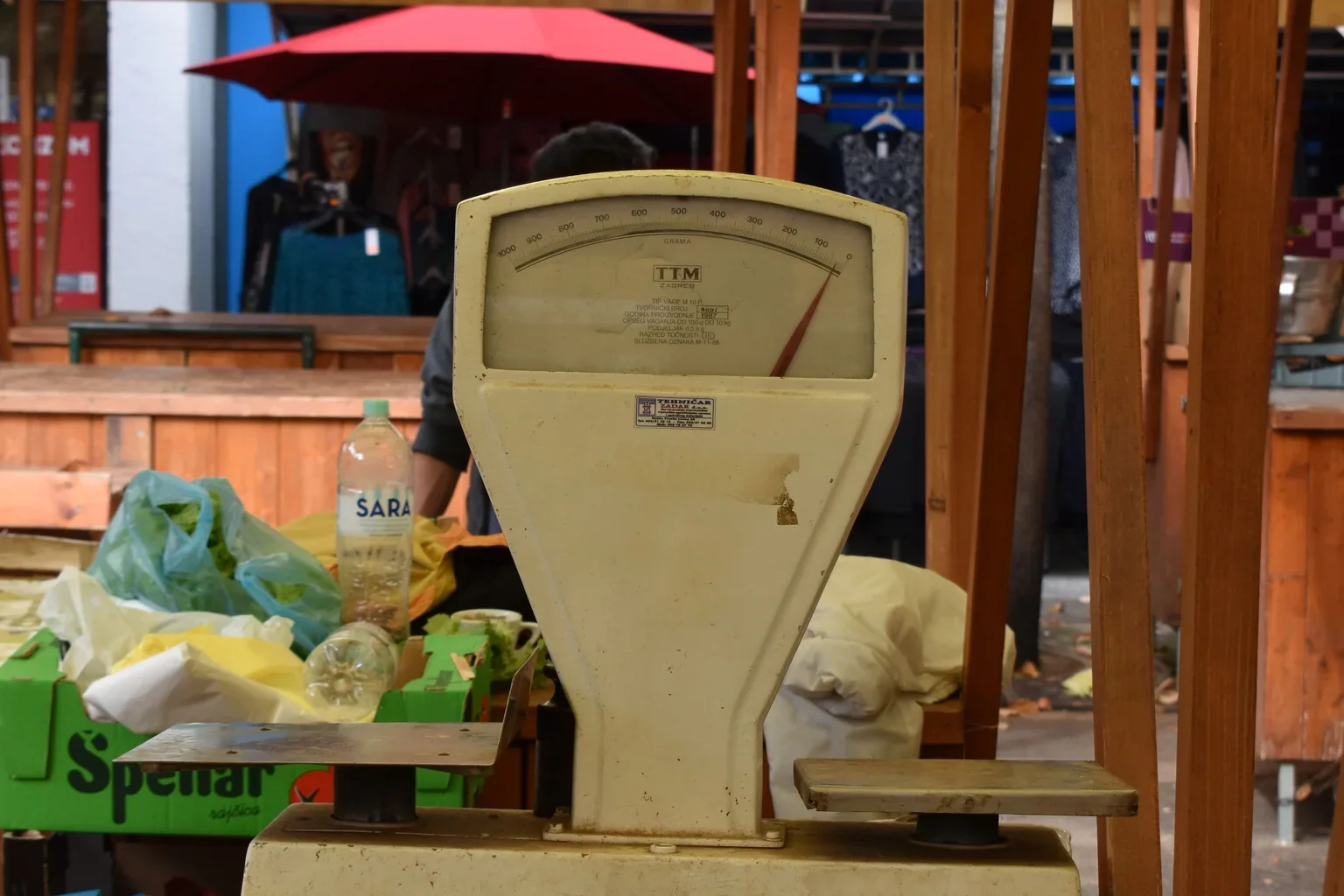
A weighed order can create a second decision. You request two hundred grams of cheese and the cut piece weighs a little more. The seller may ask whether the amount is acceptable. Listen for the number and respond according to what you want, rather than treating every question as a request to add another product.
In this original practice exchange, you say "Doscientos gramos de queso, por favor" (Two hundred grams of cheese, please). The seller answers "Son doscientos veinte gramos. ¿Está bien así?" (It is two hundred twenty grams. Is that all right?). You can say "Sí, está bien" (Yes, that is fine) or "Un poco menos, por favor" (A little less, please). Choose the answer that matches the amount you want.
If you accept the new amount, remember that the total may reflect the actual weight. The seller's question was about quantity, not a promise that the price stays the same. If the cost matters, ask for the total before agreeing to the purchase.
At a counter that offers slicing, "¿En lonchas?" means "In slices?" You can answer "Sí, en lonchas finas, por favor" (Yes, in thin slices, please). If you want a piece instead, "En un trozo, por favor" means "In one piece, please." These are choices to use where that service is offered, not instructions for every packaged cheese purchase.
Practice one quantity correction aloud. Ask for a small amount, hear a slightly larger one, and request less. Saying "Un poco menos" at the right moment is more useful than memorizing twenty cheeses you are unlikely to buy.
Ask who weighs loose produce
Food sold a granel is sold loose rather than in a prepared package. The term can appear with produce, nuts, grains or other goods. It tells you something about how the food is offered, but it does not tell you who operates the scale.
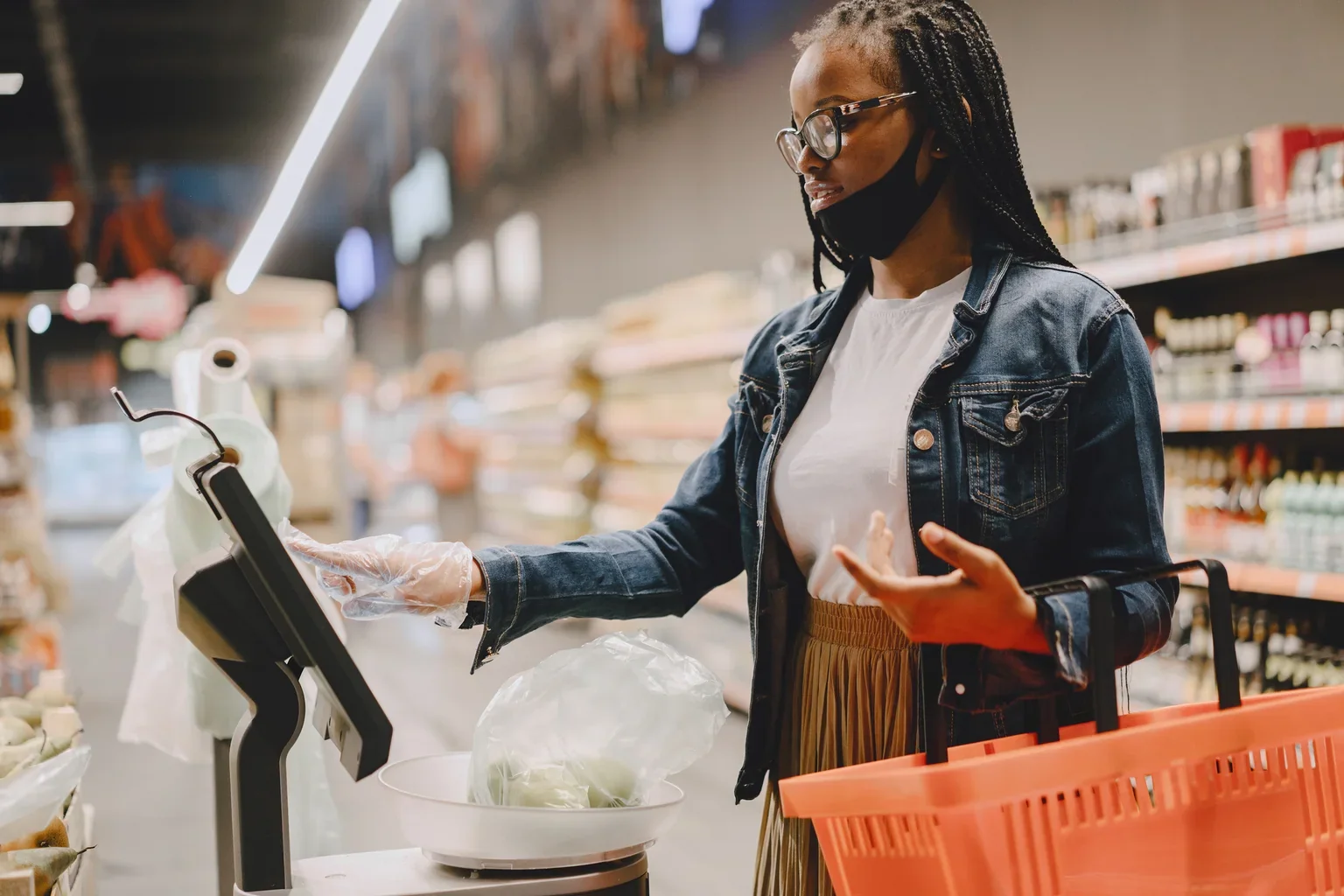
If there is a customer scale and you are unsure whether to use it, ask "¿Tengo que pesarlo aquí?" (Do I have to weigh it here?), referring to one product or bag. "¿Lo pesan en la caja?" means "Do they weigh it at checkout?" The answer determines whether you need to do anything before joining the line.
A staff member might say "Tiene que poner una etiqueta" (You need to put a label on it). If you cannot see how, ask "¿Me puede enseñar cómo?" (Could you show me how?). A demonstration can solve the problem without requiring a long explanation of the machine. Follow the actual screen and staff instructions rather than a remembered procedure from another store.
At a staffed stall, the vendor may weigh the food for you. You can then focus on the amount and price. Check who is responsible for weighing before you put the bag in your basket. Our Spanish help guide offers specific questions when you need an explanation, a slower answer, or something shown to you.
Recognize the small questions at checkout
At checkout, your opening request may be finished while the conversation continues. "¿Necesita una bolsa?" means "Do you need a bag?" If you brought your own, "No, gracias. Tengo una" means "No, thank you. I have one." If you need one, say "Sí, una, por favor" (Yes, one, please). The number keeps the request clear.
"¿En efectivo o con tarjeta?" means "Cash or card?" Answer "Con tarjeta, por favor" (By card, please) or "En efectivo" (In cash), according to how you want to pay. If you need to check card acceptance first, ask "¿Puedo pagar con tarjeta?" (Can I pay by card?). The answer belongs to that shop and that purchase.
When using a terminal, wait until it is ready and follow the instructions you understand. "¿Ya puedo pagar?" means "Can I pay now?" If the cashier points at the device and speaks quickly, ask for the instruction again. If you are unsure whether the payment went through, ask the cashier to confirm.
You might also be asked about a store card: "¿Tiene la tarjeta de la tienda?" (Do you have the store card?). That differs from choosing to pay with a bank card. "No, no tengo" (No, I do not have one) answers the question without starting an unnecessary explanation.
If a receipt is important, ask "¿Me da el recibo, por favor?" (Could you give me the receipt, please?). Then check any item or amount you are unsure about while you can still ask the cashier. You can learn other local receipt terms later; the immediate job is to obtain the record you need.
Put a short shopping trip together
Here is a practice trip with three purchases: loose tomatoes from a staffed counter, a packet of rice from a shelf, and a bottle of water. Write those items on a list with the amount beside each. Keep the tomatoes at half a kilo so that you have one weighed request and two packaged products.
First, ask for the tomatoes. Your partner responds that the bag weighs six hundred grams. Decide whether to accept it or request less. Next, ask which aisle contains the rice. Your partner gives a number that you repeat back. Finally, answer the bag and payment questions at checkout. Each turn completes a different part of the trip.
When you finish, check the outcome against your list. Did you end with the amount of tomatoes you wanted? Did you find the rice rather than merely repeat the aisle number? Did your final answer make clear how you wanted to pay? These checks keep the exercise connected to buying food rather than reciting vocabulary.
For a shorter solo session, choose just the counter exchange. Record the seller's question, leave a pause, and answer on playback. Our ten-minute Spanish routine gives you a way to fit a small speaking task into a regular session. The suggested time is a practice structure, not a promise about how quickly you will learn.
Later, save a few phrases with the food and quantity still attached. "Medio kilo de tomates" (Half a kilo of tomatoes) is easier to use in this situation than an isolated word for tomato. The vocabulary review guide explains how to return to words through meaningful prompts. Add new products when you actually need them, keeping the request clear enough for a seller to answer.
Can you catch the number?
Practice hearing prices, times, and numbers in a short listening round.
Try the free Spanish numbers trainer ↗Common questions
How do I ask for half a kilo in Spanish?
Say "Medio kilo de…" (Half a kilo of…), then name the product. "Medio kilo de tomates, por favor" means "Half a kilo of tomatoes, please." If the seller offers a different amount, you can accept it with "Está bien" (That is fine) or ask for less.
How do I ask where something is in a supermarket?
Use "¿Dónde está…?" for a singular item, as in "¿Dónde está el arroz?" (Where is the rice?). For a plural item, use "¿Dónde están…?": "¿Dónde están los huevos?" (Where are the eggs?). Be ready for an aisle number or a short direction.
What does a granel mean?
It means the product is sold loose rather than as a prepared package. You may need to choose an amount by weight. Ask whether staff weigh it, you use a scale, or it is weighed at checkout; the expression alone does not tell you the store's procedure.
How do I say I do not need a bag?
"No necesito bolsa, gracias" means "I do not need a bag, thank you." If you have one with you, "Tengo una bolsa" means "I have a bag." A short answer is enough when the cashier asks about bags.
How do I ask for the total rather than the price per kilo?
Use "¿Cuánto es en total?" (How much is it in total?). "¿Cuánto cuesta el kilo?" (How much does a kilo cost?) asks for a rate. If the label is unclear, ask whether the price is per kilo or per item before selecting an amount.
Sources and further reading
Related Spanish phrases

At the restaurant
Ask for a table, make a simple order, and request the bill.
Explore the phrases
Shopping for clothes
Find an item, describe its fit and ask for a useful alternative.
Explore the phrases
When you need a hand
Ask someone to repeat or slow down without switching the entire conversation to English.
Explore the phrasesMore practice guides
 Spanish vocabulary 9 min read
How to remember Spanish vocabulary for speaking
Remember Spanish vocabulary with useful phrases, hidden-answer prompts, and spaced review. Learn how to move from recognizing a word to using it in a reply.
Read the guide Spanish routine 9 min read
A ten-minute Spanish routine you can repeat
Use ten minutes for Spanish listening, speaking, and review. Follow a practical routine with a worked café example and adjustments for busy or difficult days.
Read the guide Listening 10 min read
How to practice listening for meaning
Practice listening without catching every word. Give a short recording one question to answer, find what you missed in the transcript, and listen again.
Read the guide